Paper money design
as a special form of graphic design
Hồ Trọng Minh, Vietnam Numismatics #2 (01-2018), p.41-46
Vietnam Numismatics:
We have received the research article "Approaches to Studying Vietnamese Paper Money as an Artistic Object" by artist, M.A. Hồ Trọng Minh. A deep and multidimensional article that presents an artistic perspective on paper money, clearly defining the genre of banknote art, as well as the influence of the historical period and artists on Vietnamese banknote art. With the author's permission, we would like to publish the section "Paper Money Design as a Special Form of Graphic Design" for our readers.
The author worked for 10 years at the Banknote Design Department of the State Bank of Vietnam, where he directly designed several notes for the current polymer series. He is currently working at the Vietnam University of Fine Arts and is a doctoral candidate in Art Theory and History, having completed his preliminary dissertation defense at the Vietnam National Institute of Culture and Arts Studies. Research Topic: Fine Arts on Vietnamese Banknotes, 1946-2006.
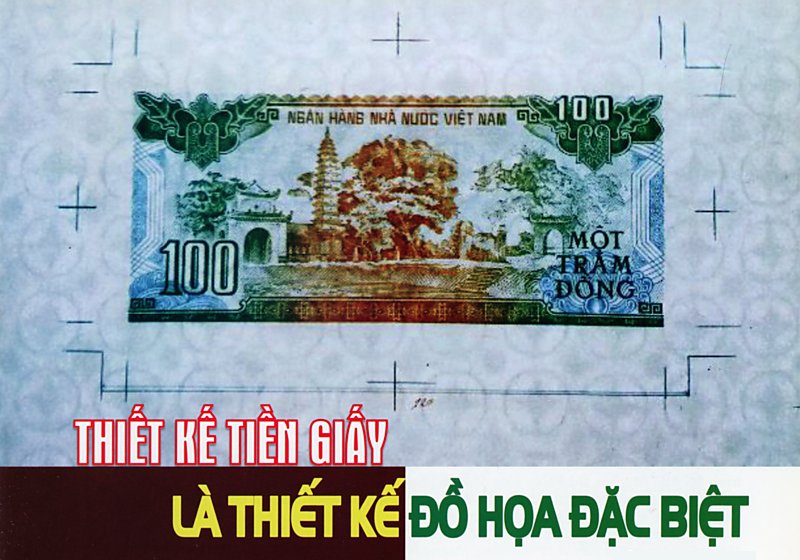
Paper money is familiar to everyone. While most focus on the monetary function of banknotes, they are rarely viewed as works of art, despite containing every essential element of graphic design. In fact, banknotes are artistic products, created through artistic feeling, careful observation, and the skillful human hands. In the age of new technology, especially digital technology, people have created many new forms of art, but the nature of art itself has not changed.
The term The Art of Money (primarily referring to banknotes) exists worldwide, covering the themes found on banknotes as well as printing methods. The most notable book at present is The Art of Money by David Standish, written in 2000, which laid the foundation for viewing banknotes as works of art.
In 2002, in the proceedings of the Applied Graphics Conference, Mr. Vũ Đình Nhâm, then Head of the Applied Art Research Department at the Institute of Fine Arts, Vietnam University of Fine Arts, in the outline of the Vietnam Applied Graphics Conference, mentioned banknotes as a subject of study in applied graphics. Also at this conference, artist Lê Huy Tiếp referred to banknotes as a product of applied graphic design, although he did not provide proof at the time. Researcher Lê Thị Hoài Linh also mentioned at the conference that "In 1396, Hồ Quý Ly[1] ordered the printing of paper money decorated with the Four Sacred Animals (dragon, phoenix, qilin, and turtle), clouds, and waves. To produce a large quantity of money, carved printing blocks may have been used, following graphic printing techniques". The author further characterizes banknote design as a genre of applied graphics, comparable to poster art, children's illustrations, or stamp design. Thus, artists and researchers have all mentioned banknotes within the field of graphic design.
Author Nguyễn Trân, in the book Genres and Forms of Fine Arts, presented the view that applied art should be classified alongside other categories such as decorative art and industrial design. In the section analyzing graphic media, he stated that "thanks to the simple yet refined and practical language of graphic art, and its convenient ability to be reproduced in large quantities, graphic art is widely applied in the fields of information and propaganda"` [2, p. 86]. Next, Nguyễn Trân also stated that "the characteristic of graphic art is the use of lines, dots, strokes, flat areas, and black-and-white contrasts to create images" [2, p. 86].
The Popular Dictionary of Fine Arts explains: "Graphic art: A branch of drawing in which printing techniques are used to create works and produce multiple copies for wide distribution". On the other hand, because it is printed in large quantities, "graphic art has many originals". The dictionary further explains: "Graphic art has many forms, including computer-generated works. In Vietnam, the use of the term graphic art is relative, because the naming of terms depends on their practical use" [3, p. 67].
Banknotes have a distinct visual language of lines, created through printing in a strict process with a series of complex technical stages. When designing the first Vietnamese paper money series, the banknote design had to be drawn at least four times larger than the actual note so that, when reduced to real size through photographic scaling, the lines would be sharp and detailed; and in print production, banknote design could clearly be classified as a field of printed graphic design. Today, banknotes are designed using computers and color printers to produce a maquette rather than a prototype. This maquette then undergoes a sophisticated platemaking process, culminating in mass production via industrial printing technology.
However, defining banknotes as a graphic design product is not sufficient; the creation of banknote designs and their printing requires the involvement of many people. Therefore, banknotes should be viewed from the perspective of design as a professional discipline. According to Associate Professor Dr. Nguyễn Ngọc Dũng, the term design can be combined with other fields in the sense of "planning and carrying out work," or in the sense of "a drawing, plan, or preliminary sketch" [4, p. 13]. However, the author affirms: "Design is still an art form; like any other art form, it expresses truth by giving form to the essence of things, and through this act of shaping, form itself is created".
The concept of design refers to the activity of creating sketches and drawings, which is the first step in planning the execution of a task or the development of a product. When it is associated with a specific industry, it becomes a guiding element for that field. In the same view, in Design, John Heskett argues that the term "design" is also understood in many different ways and from completely different perspectives. The term design can be combined with almost any product or creative activity, such as architectural design, construction design, hair design, fashion design, engineering design, game design, television program design, product design, graphic design, and so on. It can be said that "design" is a relatively broad professional concept, and it is quite loosely defined, making it difficult to classify it as a specific discipline. The term possesses so many layers of meaning that it is inherently prone to ambiguity. He proposes a definition of design: "Design is to design a design to produce a design". Renowned currency expert Hans de Heij classifies banknote design as a sub-specialty of print graphics, specifically calling it "a specific form of graphic design" [5, p.9]. According to him, banknote designers need to be proficient in 37 components that make up a banknote [5, p. 62], as well as understand the technical properties of banknote paper, anti-counterfeiting features, and the techniques of various printing methods.
According to M. Kagan's classification of art forms presented in The Morphology of Art, art can be divided into two-function art (art and utility) and single-function art (pure art) [6, p. 431]. For applied art, he points: "we call them so because the artistic function is not the primary function, but rather seems to be applied in order to suit a utilitarian function" [6, p. 431]. He suggests that "In the historical development of art, under the influence of various interwoven factors, an increasingly active process of disintegration began to occur within the earliest synthetic artistic complexes, namely literary art and technical art". After that, Kagan presented a schematic classification of the arts. We can summarize his theory as follows: Art evolves from a primitive state into "complex technical" and "complex literary" categories. Within the complex technical branch, "art production" splits into architectural and descriptive creation. Architectural creation, influenced by science and the environment, eventually gives rise to architectural art forms, including "applied arts".
The key point in Kagan's theory is that "the specific and diverse ways of artistic appropriation of the world have acquired an independent existence and have become art forms or sub-forms of these art forms" [6, p. 324].
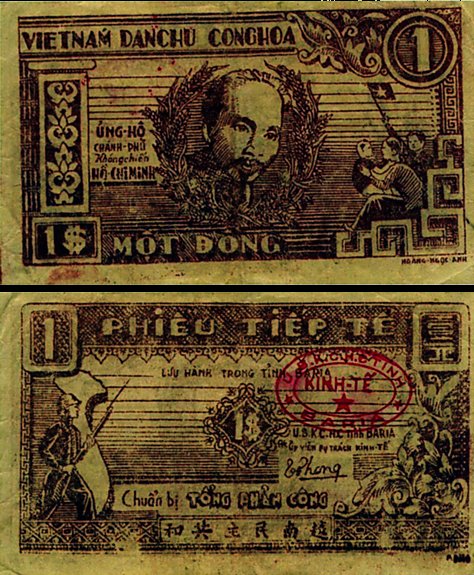
In terms of scale, banknote design is completely different from printed graphic design. This difference is reflected in the scale and level of design process. While typical graphic design focuses on a single printing and finishing method, banknote design integrates a multitude of diverse technologies, of which printing is only one part. In contrast, while printed graphic design can take many different forms of expression, banknotes have a rather fixed formal structure and are expressed mainly through line-based design, with three key elements: (1) decorative patterns and ornaments, (2) thematic imagery, and (3) the portrait of President Hồ Chí Minh.
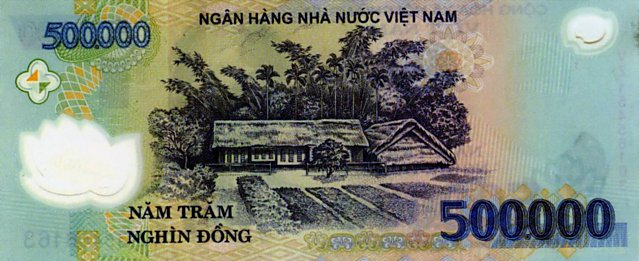
In practice, at the Third National Exhibition of Applied Fine Arts (2014) held in Hanoi, the author himself exhibited two works: enlarged banknote design mock-ups accompanied by design notes and conceptual explanations, presented in a 60 × 90 cm format. These were the reverse side of the 500,000 VND polymer banknote and both sides of the 10,000 VND polymer banknote. To qualify for the exhibition and satisfy copyright requirements, the author submitted official certification from the State Bank of Vietnam's Issue and Vault Department, confirming his role as the designer. Exhibiting these designs not only validates the artistic merit of banknotes but also enriches the broader landscape of Vietnamese graphic arts. This marked the first time in Vietnam's art history that banknotes were afforded a comprehensive and prestigious showcase at a national fine arts exhibition. These theoretical and practical foundations demonstrate that, from a fine arts perspective, banknotes can be regarded as products of fine art, specifically a special form of graphic art.
The theoretical viewpoints of the above researchers, together with practical evidence and a close examination of the specific case of Vietnamese banknote design, clearly show that banknotes are highly artistic products; banknote design is a special form of graphic design within the field of graphic design. Banknotes differ from ordinary graphic products in that they are the exclusive product of the State, representing the nation in asserting sovereignty in the economic sphere. From a design perspective, banknotes are among the most elaborately designed products, applying advanced technologies, printed in extremely large quantities, and used across wide spaces and long periods of time by a broad public.
Thus, banknote design also uses the methods of printed graphic design, but at a higher level, employing multiple printing techniques. Therefore, banknote design should be classified as a special form of graphic design. The true artistic manifestation of a banknote is the actual print on real paper, typically marked with the "Specimen" or "Tiền Mẫu" overprint. Banknotes currently in circulation are still considered issued versions; however, they do not carry the same artistic value as the original design specimens. The artist's drawings, prepress plates, and single-color prints (chromalin proofs) are only sketches or technical implementations. Counterfeit banknotes are considered illegal versions (forgeries) and have no artistic value. On the other hand, Vietnamese banknotes are artistic works with high value in both decoration and printing art. Banknote designs are applied decorative works that creatively incorporate ethnic ornamental motifs into banknotes, combined with characteristic guilloche patterns. This result contributes to art theory in defining the position of this specific type.
Studying the art of Vietnamese currency requires evaluating three key factors: the historical period and its political context, the artist's creative role, and the work's overall public impact. Although the production of banknotes depends heavily on design and printing technologies, the artist plays the decisive role in the creative process. In addition to professional competence, creative psychology is the "human creative mechanism with a realistic nature". Scholars have identified various psychological states essential to creation, including passion, inspiration, and the "spark" of imagination. Although it can be approached from different perspectives, psychological studies generally agree that the structure of artistic creativity consists of three basic components: perception, imagination, and emotion.
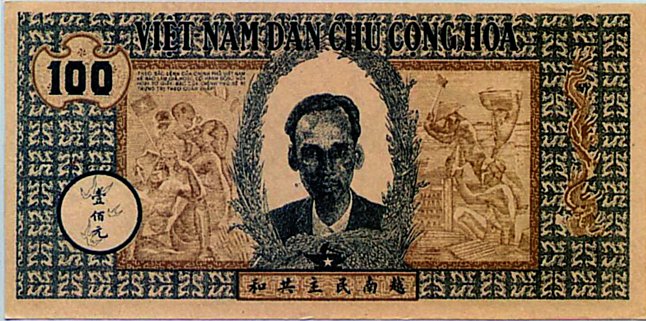
- Perception: The artist's perceptual process is the reception of influences from the objective world in the most sensitive and refined way, filtered through a personal perspective. This is the stage in which the artist prepares the material for their creative process. In the case of the first banknotes, these designs are considered highly beautiful because they were created by talented artists with a strong spirit of resistance during the war. The artist's soul perceived the resistance life as both heroic and humble, while carrying a scent of the countryside from soldiers in costumes like torn shoulders and patched pants. The Minister of Finance at the time, Lê Văn Hiến, stated: "We thought simply that it was the currency of a people's state, and it had to reflect the simple nature of the people, the beauty of nature, and the Vietnamese people. Artist Nguyễn Sáng was an artist with a spirit of resistance, he drew banknotes like painting pictures" [7, p. 51]. The environment of the Việt Bắc war zone and the overarching spirit of the era profoundly shaped the artists' creative outlook.
- Imagination: The essence of art is creativity, where novelty emerges from initial ideas through the power of the mind. Imagination, together with experience, are two fundamental elements that constitute the essence of the artist. There is no "paper artist", nor is there a "mechanical artist". To create iconic imagery that resonates emotionally with the public, an artist must rely on the core engines of imagination and feeling. In visual arts, this imagination always takes the form of visual imagery. It is a process of selection, elimination, and synthesis that creates new images or new graphic solutions. Banknote design requires the harmonious coordination of ethnic motifs, specialized security patterns, and anti-counterfeiting features across multiple printing techniques. Without imagination, a design would be artistically weak and would fail to evoke any aesthetic response in the viewer.
- Creative emotion: Emotion is a constant psychological component in an artist's life. When engaging with life, the process of perception takes place through emotional experience. Creative emotion is often shaped by contrasting states such as joy and sadness, love and hate, respect and contempt. Emotion is present throughout the entire creative process, from perception to imagination, as well as in the act of expression. If, in the process of perception, emotion helps the artist establish fundamental emotional values, and in the process of creative imagination it clarifies the artistic direction, then in the process of realizing the work, emotion acts upon the artist in a far more intense and powerful way. It is this intense emotional passion that gives rise to creative inspiration. It helps the artist quickly, correctly, and precisely resolve the given problem through appropriate artistic techniques.
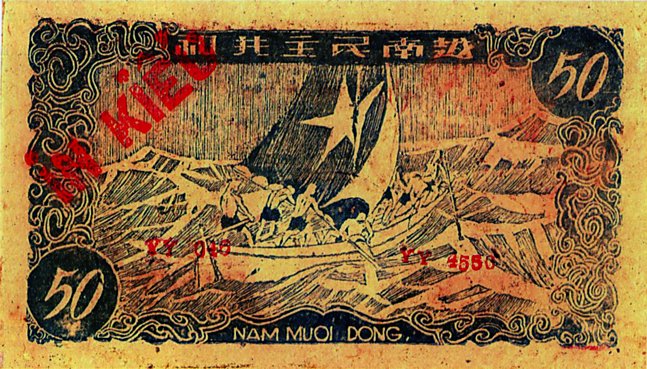
As with any art, banknote design is impossible without the artist's creative passion. Emotion makes the design model more vivid and the creative activity more effective. Regarding the artist's emotions during the creation of banknote designs, artist Nguyễn Huyền described his personal feelings while designing the 100 đồng note[2] (the green buffalo note) of the first series of 1946, as follows: "Like my fellow artists, I had never before experienced such an abundant source of artistic inspiration. We approached banknote design as a painter would, focused entirely on beauty and precision so our notes would beat the quality of French currency" [7, p.139]. Artist Mai Văn Hiến recalled his feelings while designing the 5 đồng banknote[3]: "We were very impatient, especially when we saw the arrogant and overbearing Kuomintang Chinese troops". Mai Văn Hiến then added: "Recalling Trần Hưng Đạo's[4] call to arms, I thought to myself: perhaps designing Vietnamese banknotes at this moment was also a form of resisting foreign invaders" [7, p. 143]. Reviewing the 5 đồng note designed by Mai Văn Hiến, we can see that the entire surrounding decorative frame, as well as the main ornamental sections and the frame surrounding the portrait of President Hồ Chí Minh, all use patterns and colors reminiscent of Trần Dynasty ceramics.
Studying banknotes from the perspective of art in general, and fine arts in particular, helps us understand not only their artistic values but also their traditional values. From an artistic approach, banknote art is a form of fine art belonging to the field of graphic design. With their unique nature as an exclusive graphic product of the state, most widely produced, most elaborately designed, employing the most advanced technologies, having the widest popularity and the largest audience, banknotes can be regarded as a representative graphic product of a nation. The aesthetics of Vietnamese banknotes are defined by the following:
- Beauty in the harmony of cultural relations: artistic imagery symbolic of national culture and the beauty of the era.
- Beauty of the fine arts language: Banknotes are typical decorative products, integrating the values of forms, shapes, colors, decorations, and patterns characteristic of banknotes.
- Beauty from a design perspective: The design language and style are simultaneously personal, national, and modern. Harmoniously combining aesthetic and anti-counterfeiting elements. The design is both aesthetically refined and suitable for reproduction and printing.
- Functional Beauty: Clarity of recognition and the integrity of anti-counterfeiting measures.
Since currency must both represent the nation artistically and meet industrial standards, designers must be masters of printing technology, substrate production, and specialized aesthetics. Thus, banknote design is a special form of graphic design.
Resources
1. David Standish (2000). The Art of Money: The History and Design of Paper Currency from Around the World. Chronicle Books, San Francisco.
2. Nguyễn Trân (2005). Các thể loại và loại hình Mỹ thuật. NXB Mỹ thuật, Hanoi.
3. Đặng Bích Ngân et al. (2002). Từ điển thuật ngữ Mỹ thuật phổ thông. NXB Giáo dục, Hanoi.
4. Nguyễn Ngọc Dũng (2012). Bàn về thuật ngữ Design. Tạp chí Nghiên cứu Mỹ thuật - trường Đại học Mỹ thuật Việt Nam - Bộ Văn hóa, Thể thao và Du lịch, No. 3+4 (43+44), pp. 12-15.
5. Hans de Heij (2012). Designing Banknote Identity. DNB Occasional Studies, Vol. 10(3).
6. M. Cagan (2004). Hình thái của Nghệ thuật. Người dịch Phan Ngọc. NXB Hội nhà văn, Hanoi.
7. Various Authors (1991). 40 mùa sen nở. Ngân hàng Nhà nước Việt Nam, Hanoi.
[1] art-hanoi.com: Hồ Quý Ly (1336-1407), Emperor of Đại Ngu (Vietnam) from 1400 to 1401, founder of the Hồ Dynasty. (wikipedia)
[2] art-hanoi.com: North Vietnam 100 Dong 1946
[3] art-hanoi.com: North Vietnam 5 Dong 1946
[4] art-hanoi.com: Trần Hưng Đạo (1228-1300), Imperial Prince and military commander of Đại Việt, best known for leading Vietnamese forces to victory against the Mongol invasions. (wikipedia)
(*) The article uses images courtesy of Mai Ngọc Phát.