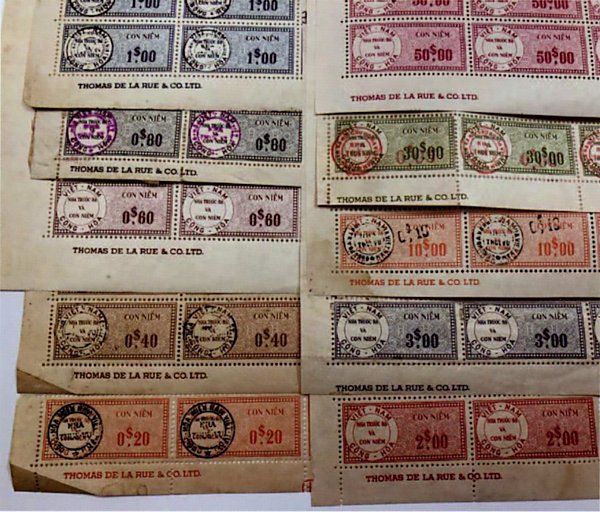
Thomas De La Rue & De La Rue
The history of the world's largest and most famous printing company
Trần Văn Nam, Vietnam Numismatics #5 (10-2018), p.16-22
Many countries around the world use printing technology or documents produced by De La Rue. However, so far, no Vietnamese publication has provided a complete account of the company, from its founding to its current success. The following article provides readers with useful information about the company, helping them better understand the items in their collections.
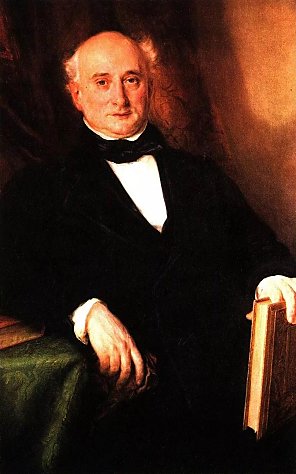
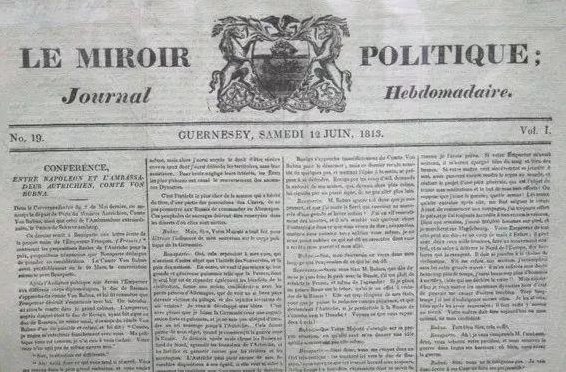
Thomas De La Rue was born on 24 March 1793 in the parish of La Forêt, in the south of Guernsey. He was the seventh of nine children (seven sons and two daughters) born to Eleazar De La Rue (1756-1816) and Rachael Allez (Rachael De La Rue, 1756-1842). At the age of 10, his father sent him to learn printing under the guidance of Joseph Antoine Chevalier in the town of Saint Peter Port, the capital of Guernsey. After learning the trade, he and his friend Tom Greenslade founded a newspaper called Le Publiciste. After separating from Tom Greenslade to start his own business, he succeeded with his first independent publication, the newspaper Le Miroir Politique, first published in Guernsey in 1813, when he was 20 years old. He married Jane Warren (1789-1858) on 21 March 1816, at the age of 23. They had eight children (two sons and six daughters).
1816 marked a major turning point in his life. He moved to London with his family and launched a straw hat manufacturing business. By 1821, he laid the foundation for the future Thomas De La Rue company by opening a printing and stationery business. In 1830, he co-founded Thomas De La Rue with Samuel Cornish and William Rock, focusing primarily on producing playing cards.
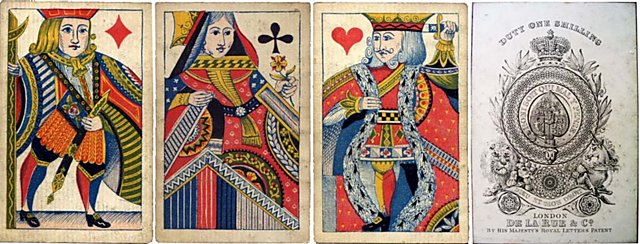
Just one year after the company began operating, he invented modern printing methods making text easier to read, highlighting the content, and conveying the designer's intent to readers. He was awarded the Royal Letters Patent by King William IV to manufacture playing cards, making his company the first in the industry to receive this honour.
Famous architect and designer Owen Jones joined his company shortly afterward. After seven years in business, his wife, two sons (William Frederick and Warren De La Rue), and youngest daughter also joined him in the business. In 1846, his son, Warren De La Rue, invented an envelope-making machine that could produce 2,700 envelopes per hour. It was displayed at the Great Exhibition of 1851, held at the Crystal Palace in London, and at later exhibitions in New York and Paris.
The year 1853 marked a major milestone for the company when it secured a contract to print revenue stamps for the United Kingdom. These were the first stamps ever used for revenue and commercial purposes both in the United Kingdom and the world.
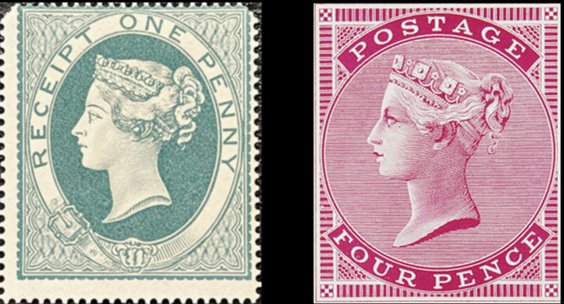
Two years later, in 1855, De La Rue secured multiple contracts to print and supply postage stamps for India, followed by territories such as Mauritius, Ceylon, and the Bahamas. He retired in 1858 at age of 65, handing the business over to his sons. He died in London in 1866, at the age of 75.
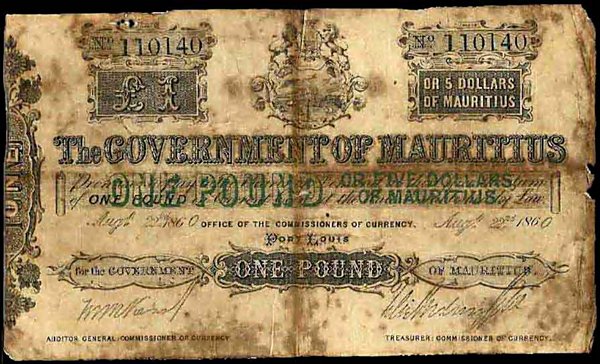
Upon his retirement in 1858, his company, Thomas De La Rue, changed its name to De La Rue. In 1860, the company reached a key milestone by securing its first banknote printing contract. The first banknotes printed by the company were the 1, 5, and 10 shilling notes for Mauritius.
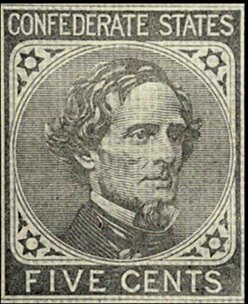
The company also secured a contract to produce postage stamps for the Confederate States. The first American stamp produced overseas was a 5 cent stamp with the portrait of President Jefferson Davis.
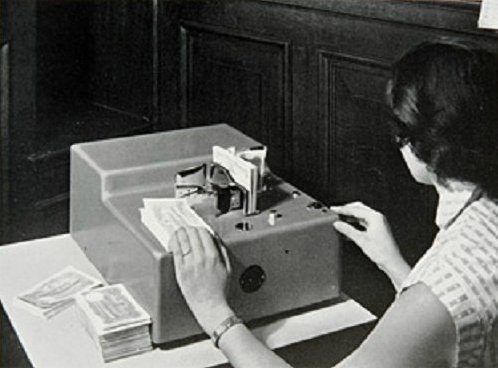
In 1872, De La Rue expanded into greeting cards, becoming a premier producer of Christmas cards. In 1874, the company built a new headquarters in London. In 1896, De La Rue was restructured as a private company managed by the De La Rue family until 1921. After the family retired from management, the company opened a currency printing facility in Shanghai in 1938. On 27 March 1947, the company was listed on the London Stock Exchange. The company developed and manufactured a banknote counting machine in 1957.
In 1965, the firm entered into a Swiss-based joint venture named De La Rue Giori, specializing in the manufacture of specialized banknote printing presses. In 1967, the company helped develop and install the world's first ATM at Barclays Bank in Enfield, UK. By 1969, the company had sold its playing card manufacturing business to John Waddington.
In 1991, De La Rue Limited changed its corporate status and name to De La Rue plc. In 1993, De La Rue acquired an initial 22.5% stake in Camelot Group plc (which it sold in full in 2010). The group was granted a licence to operate the UK National Lottery the following year. In 1995, De La Rue acquired the Portals Group, a major UK banknote paper manufacturer founded in 1724. Two years later, the company continued its expansion by acquiring Harrison and Sons, a postage stamp and banknote printer founded in 1750 and based in High Wycombe, UK.
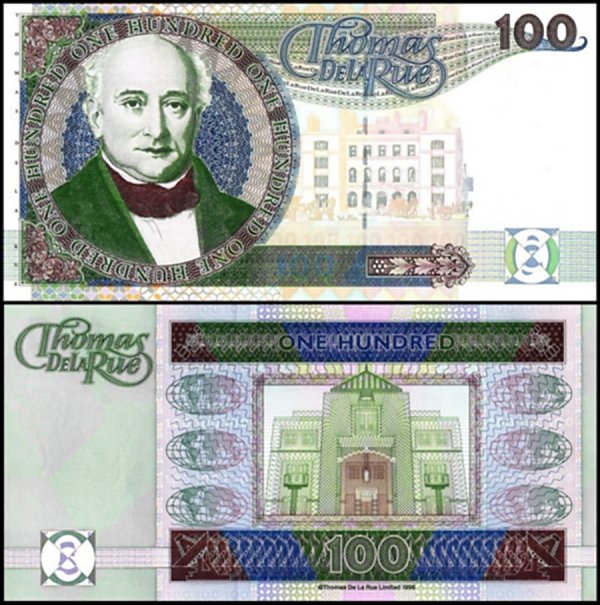
In 1996, the company marked 100 years since it became a private company managed by the De La Rue family. To celebrate this milestone, the company issued a banknote with a denomination of One Hundred, commemorating its 100 years of development and honouring its founder, Thomas De La Rue.
In 2003, the company successfully secured a seven-year contract (2003-2010) to print banknotes for the United Kingdom. In 2007, the company received the Queen's Award for its innovations in currency security. In 2009, De La Rue secured a ten-year contract to produce UK passports and extended its banknote printing contract.
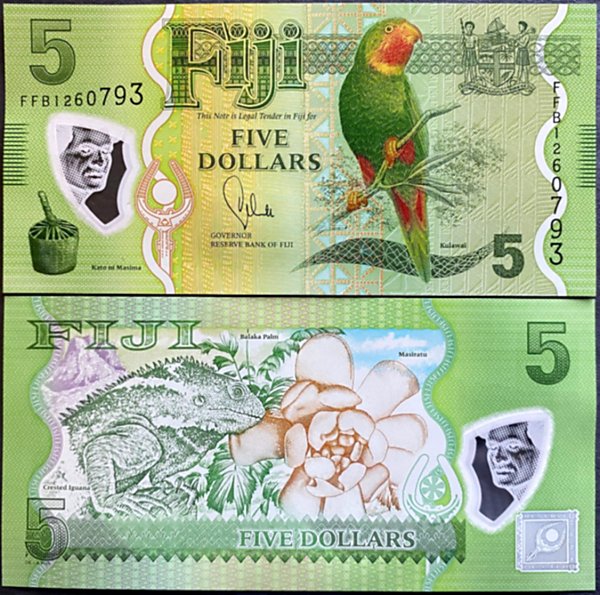
In 2012, De La Rue produced polymer banknotes for Fiji using its proprietary substrate. The first issue on this substrate was Fiji 2013 polymer 5 dollar banknote.
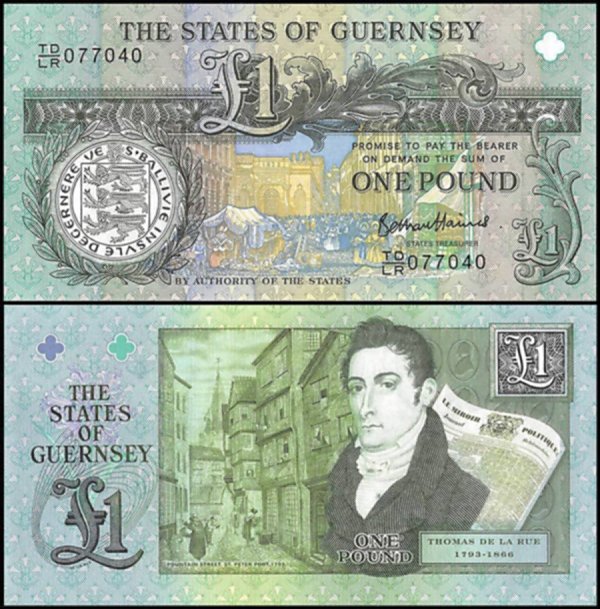
2013 marked the 200th anniversary of Thomas De La Rue first publication, *Le Miroir Politique*, printed in Guernsey in 1813. To honour this distinguished son of Guernsey, who brought pride to his homeland, and to mark the 200th anniversary of his first business venture, the Guernsey government issued a commemorative £1 banknote on 4 July 2013. A total of 300,000 notes were issued.
2018 was a difficult year for the company, as its share price fell and it lost the passport manufacturing contract to French-Dutch Gemalto.
De La Rue remains arguably the world's largest commercial banknote printer, leading in security technology. Besides printing banknotes, the company exports security paper and technology to over 150 countries. Beyond currency, De La Rue produces diverse high-security items including driver's licenses, passports, postage and revenue stamps, and official legal certificates.
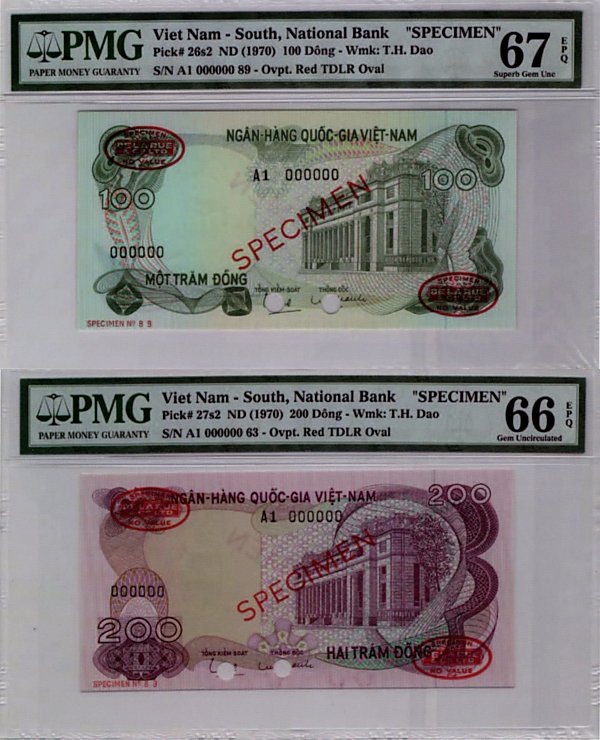
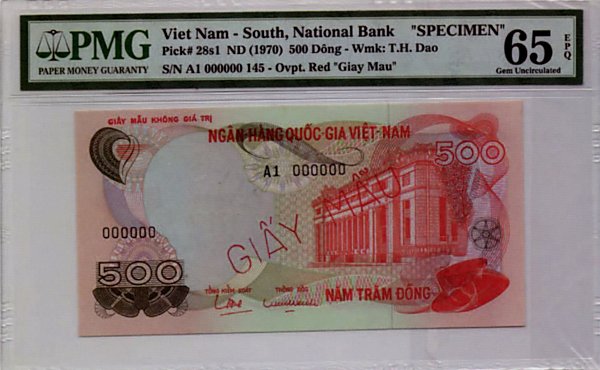
In the following section, we present some banknotes and revenue stamps printed by De La Rue for countries around the world, including Vietnam.