Vietnam, Summer Olympics and commemorative coins
Nguyễn Hoàng Hải, Vietnam Numismatics #5 (10-2018), p.8-11
The Olympic Games bring together athletes from around the world. The Summer Olympics have been held every four years since 1896, except during the World Wars. The Winter Olympics began in 1924, the year of the Summer Olympics. Since 1994, the Winter and Summer Olympics have alternated every two years. The Olympics are not only athletic competitions but also a symbol of global unity and peace, with a major worldwide impact.
The flag with five interlocking rings on a white background is a well-known Olympic symbol. The flag represents the five continents: yellow for Asia, green for Europe, black for Africa, blue for Oceania, and red for the Americas. The five interlocking rings on a white background symbolize equality and unity among nations and continents, reflecting the spirit of the Olympics.
In Vietnam, under the French protectorate, colonial cultural and educational policies brought major changes to Vietnamese scholarship, culture, and society. The French introduced sports to Cochinchina. These soon spread throughout French Indochina and developed rapidly, mainly in urban areas where the French lived.
With the aim of improving public health and fitness, raising sports performance, and promoting the physical and personal development of the Vietnamese people, several voluntary Olympic sports organizations were formed in Vietnam in the 1950s. They brought together members of progressive groups in society and were recognized by international sports federations and associations.
After Vietnam was reunified in 1975, the Olympic sports movement had greater opportunities to expand nationwide and improve public fitness to serve the cause of national construction and defense. Following the general trend of the international Olympic movement toward integration into the global sports community, the Vietnam Olympic Committee was established and developed over time to promote friendship, solidarity, and international cooperation for peace and social progress.
Vietnam's former Olympic sports organizations and today's Olympic Committee have sent athletes to compete in the following Summer Olympics:
1. At the 1952 Summer Olympics in Helsinki, Finland, the Vietnamese team (representing the State of Vietnam), consisting of eight athletes, competed in five events in five sports: athletics, swimming, boxing, fencing, and cycling. This was Vietnam's first appearance at the Summer Olympics.
2. At the 1956 Summer Olympics in Melbourne, Australia, the Vietnamese team (representing the Republic of Vietnam), consisting of six athletes, competed in three events in one sport: cycling.
3. At the 1960 Summer Olympics in Rome, Italy, the Vietnamese team (representing the Republic of Vietnam), consisting of three athletes, competed in five events in two sports: fencing and swimming.
4. At the 1964 Summer Olympics in Tokyo, Japan, the Vietnamese team (representing the Republic of Vietnam), consisting of 16 athletes, competed in 14 events in five sports: athletics, cycling, fencing, judo, and swimming.
5. At the 1968 Summer Olympics in Mexico City, Mexico, the Vietnamese team (representing the Republic of Vietnam), consisting of nine athletes, competed in seven events in five sports: athletics, cycling, shooting, fencing, and swimming.
6. At the 1972 Summer Olympics in Munich, West Germany, the Vietnamese team (representing the Republic of Vietnam), consisting of two athletes, competed in two events in shooting.
7. At the 1980 Summer Olympics in Moscow, USSR, the Vietnamese team, consisting of 35 athletes, competed in 11 events in four sports: athletics, swimming, wrestling, and shooting. After the reunification of North and South Vietnam, Vietnamese teams have competed under the flag of the Socialist Republic of Vietnam to the present day.
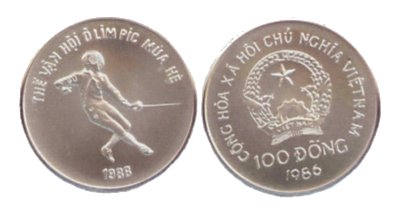
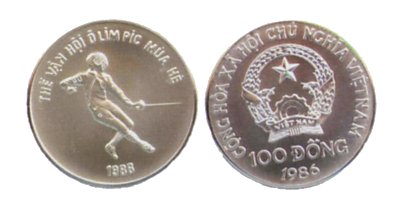
8. At the 1988 Summer Olympics in Seoul, South Korea, the Vietnamese team, consisting of nine athletes, competed in 12 events in six sports: athletics, swimming, boxing, shooting, wrestling, and cycling. A Vietnamese commemorative coin was issued featuring a fencer. (Figure 1).
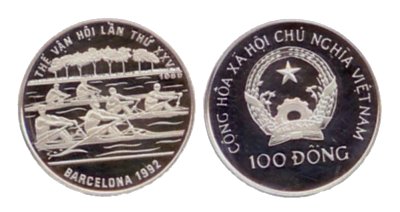
9. At the 1992 Summer Olympics in Barcelona, Spain, the Vietnamese team, consisting of seven athletes, competed in 10 events in three sports: athletics, swimming, and shooting. A Vietnamese commemorative coin was issued featuring rowers (Figure 2).
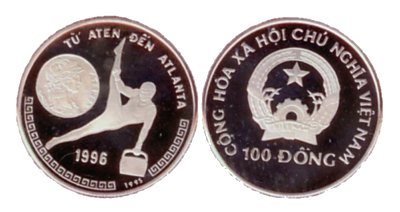
10. At the 1996 Summer Olympics in Atlanta, United States, the Vietnamese team, consisting of six athletes, competed in six events in four sports: athletics, swimming, shooting, and judo. A Vietnamese commemorative coin was issued featuring a gymnast (Figure 3).
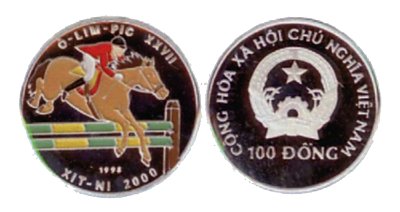
11. At the 2000 Summer Olympics in Sydney, Australia, the Vietnamese team, consisting of seven athletes, competed in six events in four sports: athletics, shooting, swimming, and taekwondo. Athlete Trần Hiếu Ngân, born in 1974 in Phú Yên, won the silver medal in the women's 49-57 kg taekwondo competition. This was the first time Vietnam won a medal at the Olympic Games. Trần Hiếu Ngân's silver medal placed Vietnam 64th among the 199 countries participating in the Games. Vietnamese commemorative coins were issued featuring athletes in equestrian sports, discus throwing, and martial arts (Figures 4, 5, and 6).
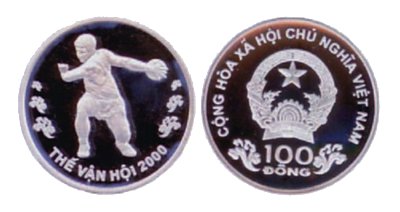
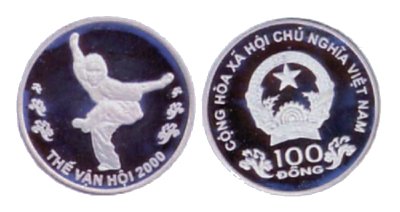
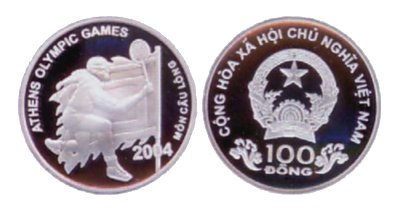
12. At the 2004 Summer Olympics in Athens, Greece, the Vietnamese team, consisting of 11 athletes, competed in 11 events in eight sports: athletics, canoeing, rowing, shooting, swimming, table tennis, taekwondo, and weightlifting. A Vietnamese commemorative coin was issued featuring a badminton player (Figure 7).
13. At the 2008 Summer Olympics in Beijing, China, the Vietnamese team, consisting of 13 athletes, competed in 14 events in eight sports: athletics, shooting, table tennis, swimming, badminton, weightlifting, taekwondo, and gymnastics. Athlete Hoàng Anh Tuấn, born in 1985 in Bắc Ninh, won a silver medal in the men's 56 kg weightlifting event, Vietnam's only medal at the Games. This was the second time in the history of the Summer Olympics that Vietnam won a medal. Hoàng Anh Tuấn's silver medal placed Vietnam 70th among the 204 countries participating in the Games.
14. At the 2012 Summer Olympics in London, United Kingdom, the Vietnamese team, consisting of 18 athletes, competed in 23 events in 11 sports: athletics, shooting, swimming, badminton, fencing, judo, rowing, weightlifting, taekwondo, wrestling, and gymnastics.
15. At the 2016 Summer Olympics in Rio de Janeiro, Brazil, the Vietnamese team, consisting of 23 athletes, competed in 25 events in 10 sports: athletics, shooting, swimming, badminton, judo, weightlifting, fencing, rowing, wrestling, and gymnastics. The Vietnamese team won its first-ever Olympic gold medal when shooter Hoàng Xuân Vinh, born in 1974 in Hanoi, won the 10-meter air pistol competition. Additionally, he won a silver medal for Vietnam in the men's 50-meter pistol competition. Hoàng Xuân Vinh's achievements placed Vietnam 48th among the 207 countries participating in the Games.
Since its debut at the Summer Olympics in 1952, Vietnam has participated in the Games 15 times. During this period, for various reasons, Vietnam did not participate in the 1976 and 1984 Summer Olympics. Vietnam has never participated in the Winter Olympics.
Wishing to introduce Vietnam and its people to the world and to mark international sporting events such as the Summer and Winter Olympics, Vietnam has authorized the issuance of several commemorative coins for these events.
Collectibles - variants
Commemorative coins are issued to mark an event or a particular subject, therefore, commemorative coins are of great interest to thematic collectors.
Since the first commemorative coin issued in 1986, Vietnam's commemorative coins made of alloys, silver, and gold have been produced by the following mints:
- The Soviet Mint (Ленинградский Монетный Двор, St. Petersburg, USSR);
- The Cuban Mint (Empresa Cubana de Acuñaciones, Havana, Cuba);
- The Hungarian Mint (Magyar Állami Pénzverő, Budapest, Hungary);
- The Finland Mint (Suomen Rahapaja Oy, Vantaa, Finland);
- The Austrian Mint (Münze Österreich AG, Vienna, Austria);
- The Singapore Mint (Singapore Mint Pte Ltd, Singapore).
While collecting Vietnamese commemorative coins themed on the Summer Olympics, I found several variants with die differences, as follows:
- In addition to the coin shown in Figure 1, this type has another variant with the same obverse design but a larger font on the reverse (Figure 8).
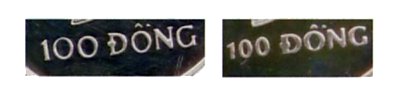
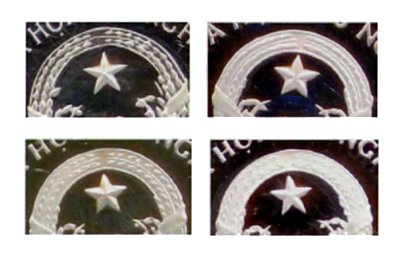
- In addition to the coin shown in Figure 2, the 1992 Summer Olympics commemorative coin for Barcelona has other variants with the same obverse design but differences on the reverse:
First, that is a difference in font style for the numeral 100 (Figure 9).
Next, the national emblem has different designs of the rice stalks inside it (Figure 10).
Thus, for the 1992 Summer Olympics commemorative coin for Barcelona, besides the variants mentioned above and those illustrated in world coin reference books and catalogs, it is unclear whether any other variants of this coin exist.
Because Vietnam's commemorative coins were minted and issued by overseas facilities, domestic researchers and collectors face significant challenges. Our information regarding Vietnamese commemorative coinage relies almost entirely on foreign-published catalogs. How many variants of Vietnamese commemorative coins actually exist? This is a question that researchers and collectors have yet to answer.