Counterfeit money from Operation CM12
Huỳnh Hoài Hãn, Nguyễn Văn Mai, Vietnam Numismatics #4 (07-2018), p.3-7
Operation CM12 (CM is an abbreviation formed from the first two letters of Cà Mau, while 12 refers to the date of departure of the "United Front of Patriotic Forces for the Liberation of Vietnam" - May 12, 1981) was also the name of the core operation to intercept and capture this organization, along with a large quantity of weapons and counterfeit money, as the organization infiltrated Vietnam from the coastal area of Cà Mau Province during 1981-1984. Vietnamese police disguised themselves as infiltrating commando forces and contacted Lê Quốc Túy and Mai Văn Hạnh to uncover more personnel, weapons, and currency, while preventing the plans to threaten national security.
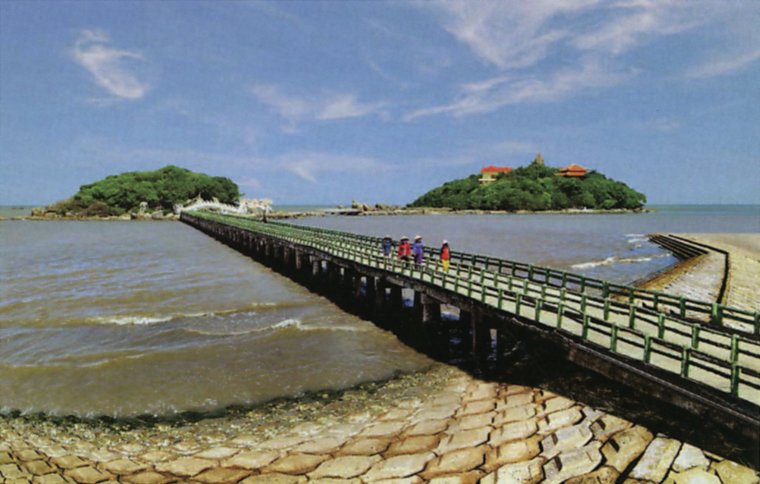
Located in the western sea, Hòn Đá Bạc (Kinh Hòn, Khánh Bình Tây Commune, Trần Văn Thời District, Cà Mau Province) serves as a coastal outpost. The people of Cà Mau call Hòn Đá Bạc the Jewel Eye of the Western Sea. Besides honoring the island's beauty, the name also compares it to a sharp eye watching over the country's western sea. During the war, the vast U Minh Hạ area in Trần Văn Thời District was a resistance base. From Hòn Đá Bạc, one could monitor the coastal road connecting Khánh Bình Tây with U Minh Hạ and Sông Đốc. (In 1954, Sông Đốc was a 200-day assembly point under the Geneva Accords). Because of its strategic location, during the Vietnam War, the Republic of Vietnam government stationed a platoon of 105 mm artillery at Hòn Đá Bạc to control the revolutionary base area and the coastal route in western Cà Mau. On December 7, 1971, local forces and civilians from Khánh Bình Tây Commune attacked and liberated the area, securing the coastal route of the Trần Văn Thời base area. Today, a stele at the top of Hòn Đá Bạc commemorates this victory by the people and armed forces of Khánh Bình Tây.
The waters around Hòn Đá Bạc are rich and diverse in marine species, including oysters, a local delicacy mentioned by Nghê Văn Lương and Huỳnh Minh in their historical study Cà Mau Xưa. Previously, Hòn Đá Bạc was more than 42 km offshore from Khánh Bình Tây Commune, and reaching the island required a boat. In recent years, Vàm Đá Bạc in Khánh Bình Tây Commune has gradually expanded into the sea, forming a new fishing village. Perhaps Hòn Đá Bạc is now the only island in Vietnam that can be reached on foot by crossing a straight, two-lane concrete bridge more than 1 km long.
There are many legends about this lovely island, but the best-known is the story of Operation CM12. In the late 1980s, many people became aware of the plot by the "United Front of Patriotic Forces for the Liberation of Vietnam", led by Lê Quốc Túy and Mai Văn Hạnh, to stage an uprising and overthrow the government. Even today, looking back at old documents, one cannot help but be surprised by the scale and extent of extent of this organization's activities. Over four years, from 1981 to 1984, Lê Quốc Túy and Mai Văn Hạnh organized dozens of infiltrations into Vietnam, involving hundreds of commandos equipped with weapons, communications gear, medical supplies, and counterfeit currency. The majority of these landings were directed at the western coast of Cà Mau. Hòn Đá Bạc, chosen by Lê Quốc Túy and Mai Văn Hạnh's network as a primary landing zone, became the operational command center of the Vietnamese People's Public Security, which carried out the CM12 counterintelligence operation against the group's infiltration campaign.
On September 9, 1984, security forces intercepted the final two infiltration vessels, capturing Mai Văn Hạnh and Trần Văn Bá. Lê Quốc Túy, who was seriously ill, did not go on this trip. Operation CM12 came to an end.
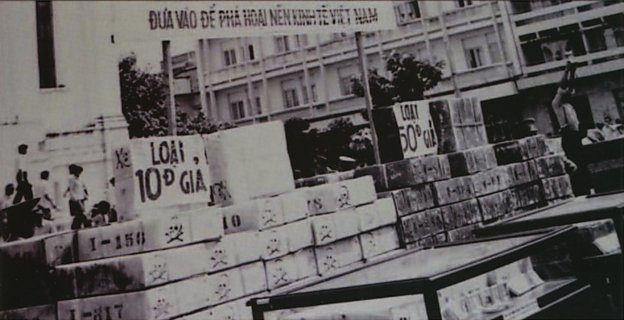
Through the operation, the security forces compelled the opposing group to carry out 18 planned infiltrations into the waters of Cà Mau. They captured all 126 insurgents coming from abroad, seized more than 132 tons of weapons and 299,750,000 Vietnamese đồng in counterfeit money (weighing roughly 10 tons), along with many documents and medical supplies, and dismantled 10 domestic reactionary organizations established and connected by Lê Quốc Túy.
Between December 14 and 18, 1984, in Ho Chi Minh City, the Supreme People's Court held a trial and sentenced five people to death, three to life imprisonment, and 13 to prison terms of 8 to 20 years. Outside the courtroom was an exhibition of photographs and evidence seized during the operation.
Over the next three years, Plan ĐN10, the continuation of Operation CM12, was carried out. From Đồng Nai (where the Đồng Nai security forces discovered, controlled, and manipulated the rebels' radio operator) to Hòn Đá Bạc on the coast of Cà Mau (where the Operation Committee had deliberately prepared a site for the enemy to land troops and weapons) was quite far geographically, yet unexpectedly close through joint efforts to execute Plan ĐN10. In particular, through effective cooperation with the Cambodian security forces, Lê Quốc Túy was forced to send all the troops trained in Thailand back to Vietnam through Cambodia. And by the end of 1987, the last groups of infiltrating spies were captured one after another by the Vietnamese police.
On January 30, 1988, Lê Quốc Túy's representative in France dispatched a telegram to the DN10 operatives announcing that Lê Quốc Túy had passed away on January 25, 1988. On March 4, 1988, a final transmission was sent to domestic cells announcing the dissolution of the "United Front of Patriotic Forces for the Liberation of Vietnam".
In 2005, as part of the annual amnesty on September 2, Mai Văn Hạnh was released early from prison.
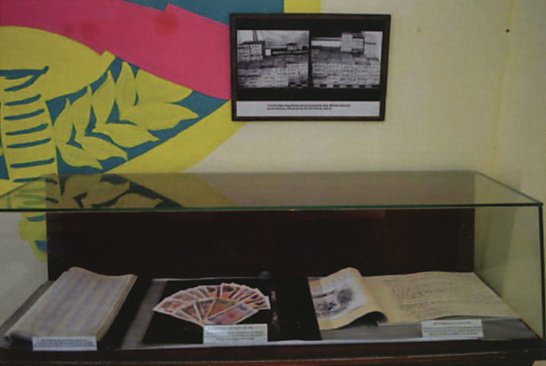
In summary, the 10 tons of counterfeit money from Operation CM12 consisted of two denominations: 10 đồng and 50 đồng. Both denominations were counterfeit versions of the 10 đồng and 50 đồng banknotes printed in 1976 and put into circulation by the State Bank of Vietnam during the 1978 currency exchange.
10 Dong 1976 (P-82)
Date of Issue: May 3, 1978.
Obverse: National Emblem of the Socialist Republic of Vietnam.
Reverse: Elephants hauling timber.
50 Dong 1976 (P-84)
Date of Issue: May 3, 1978.
Obverse: President Hồ Chí Minh and National Emblem.
Reverse: Quarrying stone at the Hòa Bình Hydropower Plant construction site, Hòa Bình Province.
Type 1: Large serial font.
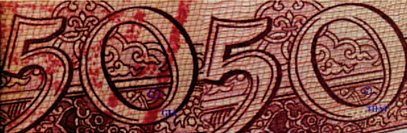
Although counterfeit, the banknotes were printed in high quality. They can be said to be 98% identical to the genuine money. To the naked eye, people could not detect the differences; specialized equipment was needed to examine and distinguish them. Therefore, upon seizure, the Task Force transferred the notes to specialized police forensic units to identify the distinguishing features from genuine bills.
These analysis results are now displayed at the CM12 Memorial House on Hòn Đá Bạc.
Collector Nguyễn Văn Mai (Hanoi), who owns these two banknotes, provided the following information after studying the differences between the counterfeit and genuine banknotes:
10 Đồng Note:
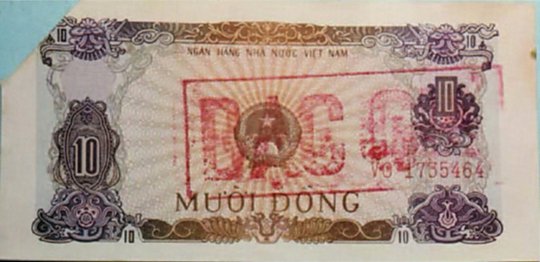
1. Security thread
- Genuine note: Thin, narrow thread.
- Counterfeit note: Thick, wide thread.
2. Background lines: The shortest line (marked by the red arrow) is used as the boundary.
- Genuine note: The 8 lines above (4 blue and 4 brown) all curve downward at the ends.
- Counterfeit note: The ends of the lines remain straight.
3. Broken lines: (Further reference is needed, as a conclusion based on only one banknote may not be accurate; the break may be due to a printing error).
- Genuine note: Broken line.
- Counterfeit note: Continuous line.
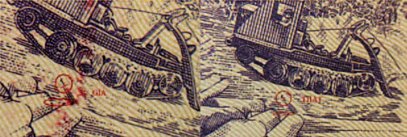
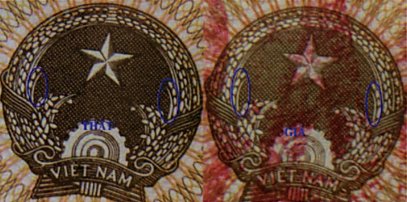
50 Đồng Note:
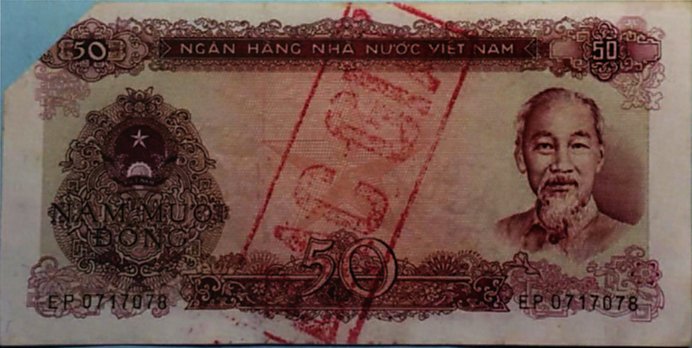
1. Security thread
- Genuine note: Thin, narrow thread.
- Counterfeit note: Thick, wide thread.
2. Background lines: The shortest line (marked by the red arrow) is used as the boundary.
- Genuine note: The 8 lines above (4 blue and 4 brown) all curve downward at the ends.
- Counterfeit note: The ends of the lines remain straight.
3. Broken lines: (Further reference is needed, as a conclusion based on only one banknote may not be accurate; the break may be due to a printing error).
- Genuine note: Broken line.
- Counterfeit note: Continuous line.
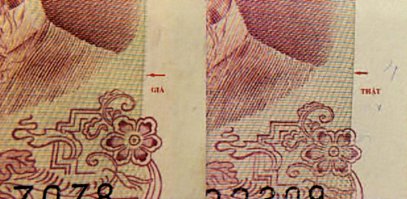
Counterfeit money in Operation CM12 was called "special cargo". During the operation, "special cargo" was shipped into Vietnam in two separate deliveries. The initial shipment arrived on June 4, 1982, comprising a total of 99,750,000 counterfeit Vietnamese dong in 10-đồng banknotes. The second shipment occurred during the 14th infiltration mission on May 24, 1983, a critical run for the "United Front of Patriotic Forces for the Liberation of Vietnam", which brought in western medicines, machinery, and 400 crates (4 tons) of 50 đồng counterfeit banknotes totaling 201 million dong. (The sum of these two figures does not match the total stated in the book).
In the memoir "Kế hoạch phản gián CM12" by Nguyễn Phước Tân and Nguyễn Khắc Phục, it is noted that following the successful smuggling of "special cargo," the "United Front of Patriotic Forces for the Liberation of Vietnam" planned to produce a new batch consisting of 100 đồng banknotes. According to the authors, this could be the 100 đồng 1980 banknote.
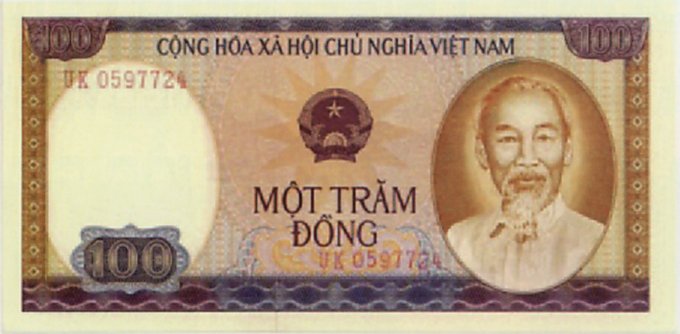
100 Dong 1980 (P-88)
Year of Issue: 1981.
Obverse: President Hồ Chí Minh and National Emblem.
Reverse: Landscape of Hạ Long Bay, Quảng Ninh Province.
Type 1: Large serial font, Type 2: Small serial font.
At the end of Operation CM12, the total amount of "special cargo" seized was 299,750,000 đồng (weighing approximately 10 tons). This was a very large amount of money, but for collectors, it is not easy at all to get these two banknotes. Because according to directives from the Supreme Commander of Special Case CM12, former Chairman of the Council of Ministers and former Deputy Prime Minister cum Minister of Interior Phạm Hùng, the entire amount of "special cargo" had to be "neutralized so that not a single note could enter circulation, even through exchange".
The author of the "Kế hoạch phản gián CM12" memoir, Hero of the People's Armed Forces and Lieutenant General Nguyễn Phước Tân, operational commander of CM12, made three observations when summarizing the operation. The third concerned Lê Quốc Túy and Mai Văn Hạnh's instructions to use counterfeit money, as follows: "Túy and Hạnh brought in two types of counterfeit money, in denominations of 10 đồng and 50 đồng, totaling 299,750,000 đồng. We refused by reporting that the banknotes were too new and using them would risk being caught. Túy suggested aging the notes by staining them with tea to make them look old before using them, but we ignored this and did not respond... All the counterfeit money brought in by the enemy under Operation CM12 was kept safely in storage until the day it was ground into powder under the Minister's orders".
Today, only a small number of these counterfeit banknotes remain as exhibits in museums and memorial houses of the police force. Therefore, finding these banknotes is quite a challenge for collectors.
Speaking of the quality of the counterfeit money from Operation CM12, it is worth mentioning another case involving counterfeit 50 đồng banknotes after the reunification of Vietnam. This was the "National Restoration Militia" case, led by Nguyễn Việt Hưng, which took place in 1976. This case was also known as the Vinh Son Church case, which took place on Trần Quốc Toản Street in Saigon (now 3/2 Street, District 10, Ho Chi Minh City).
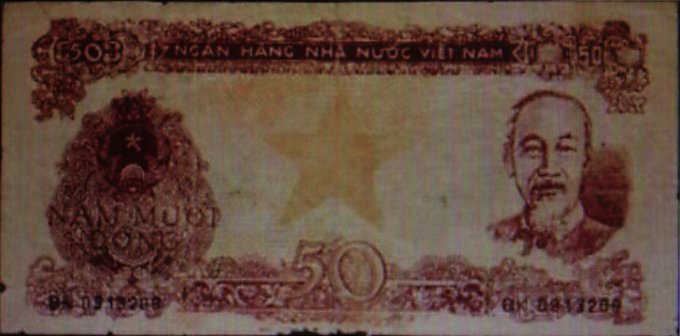
The counterfeit 50 đồng banknote from the Vinh Son Church case was obviously fake even to the naked eye, with blurred images and colors. Compared with the counterfeit notes from Operation CM12, its quality was vastly inferior. The reason for the difference in quality between these two types of counterfeit money is that the CM12 counterfeit money was produced with careful, long-term investment, while the counterfeit money in the Vinh Son Church case was printed by a small organization.