On the occasion of spring:
Quốc Thái Dân An, Phong Điều Vũ Thuận
國泰民安風調雨順
Nguyễn Anh Huy, Vietnam Numismatics #3 (04-2018), p.24-25
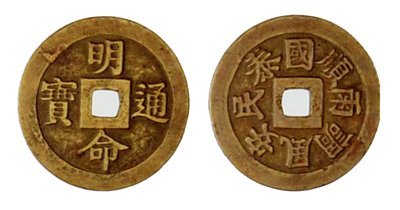
Quốc Thái Dân An, Phong Điều Vũ Thuận [國泰民安風調雨順]
As the Lunar New Year approaches, most people in the East think about decorating their homes with meaningful “good-luck symbols” to welcome the New Year with good luck and joy, often more for mental comfort and to seek good fortune. Besides that, they also go to see fortune tellers; it is an old tradition that is hard to give up...
In folk practice, fortune telling or home decoration to invite luck is very diverse and too varied to be fully studied. For example, displaying blooming yellow apricot blossoms[1] during Tết is both decorative and meaningful, because the word "mai" (apricot) sounds like "may" (luck), a connection that gave rise to the tradition of "apricot divination". Or, even the fruit offerings on the Tết altar have evolved from the traditional "five-fruit tray" to a specific selection of four: custard-apple, coconut, papaya, and mango. In the Southern dialect, these fruits "cầu, dừa, đủ, xoài" sound like "cầu vừa đủ xài", meaning a wish to earn enough money to cover living expenses...
Beyond statues and paintings, coins bearing the reign titles of certain special emperors, as well as charms or coins with auspicious words and blessings, are highly sought after by feng shui practitioners and fortune tellers, and are no less hunted by wealthy collectors...
Regarding these auspicious words, the records of the Nguyễn dynasty state: "In the year Canh Thìn [庚辰], the first year of Minh Mạng (1820) ... third month ... someone presented an ancient coin inscribed with eight characters: 國泰民安風調雨順 - Quốc Thái Dân An, Phong Điều Vũ Thuận (national peace and people's safety, favorable winds and timely rains). The Emperor showed the coin to his ministers and asked about its origin, but none could identify the period in which it was cast. The Emperor said: while the age and era of this coin cannot be verified, and the words are merely a prayerful invocation, if one can rule the realm according to those eight characters, that would be sufficient"[2].
Based on that, in 1837, Emperor Minh Mạng ordered the casting of 100,000 coins, approximately 50 mm in diameter, bearing the four characters Minh Mạng Thông Bảo [明命通寶] on the obverse. The reverse had 40 varieties, including 17 with four auspicious characters and 23 with eight auspicious characters[3].
Tracing the origins of these blessings back to literary allusions in the Four Books and Five Classics [四書五經] is very complicated. For example, the allusion "華封三祝 - Hoa Phong Tam Chúc" in the phrase "Hoa Phong Tam Chúc, Thiên Bảo Cửu Như [華封三祝天保九如]" comes from the Hoa Phong [華封] passage in the Zhuangzi [莊子]. It refers to the three wishes offered by the people of Hoa Phong: long life, wealth, and many sons - namely the auspicious terms "Phú, Thọ, Đa nam" ("Wealth, Longevity, Many Sons"), also known as "Tam đa" ("Three Abundances": abundant wealth, longevity, and sons). The poet Trần Tế Xương (1870-1907) later interpreted this idea in his poem New Year Wishes:
Quietly I listen as they exchange New Year wishes,
Wishing one another a hundred years until heads and beards are white.
This time, I've decided to go sell mortars,
With so many people in the world chewing betel.
Quietly I listen as they wish each other wealth and rank.
Some buy noble titles, others buy official posts.
This time, I've decided to go sell parasols,
Even while cursing and shouting my wares, I'd still sell plenty.
Again they wish one another wealth,
But where would all those countless riches go?
This time, surely chickens will be eating silver,
With coins falling everywhere, none would need to ask for them.
Again they wish one another many children,
Bearing five or seven, all safely and well.
The streets are already narrow and crowded,
They'll have to carry one another into the mountains to live.
With such valuable meanings, coins bearing the above inscriptions have become good fortune talismans that are always sought after.
Those are the wishes of ordinary people. But what about the wishes of the royalty?
Later emperors also followed this practice and cast similar coins, many bearing auspicious phrases whose classical sources researchers still have not identified, such as 國泰民安風調雨順 - Quốc Thái Dân An, Phong Điều Vũ Thuận.
However, recently, while reading Hải ngoại kỷ sự by Thích Đại Sán[4], written in 1695, I accidentally came across the following passage:
Early in the morning on the 15th day, I was invited into the palace, and we talked until midnight with constant enthusiasm and no sign of fatigue. While discussing the matter of praying for rain, I remained silent for a long time, then replied: There is no need to pray. I, an old monk, have come from afar, moved by the Emperor's trust, and I offer these eight characters as my response: Phong điều vũ thuận, quốc thái dân an [風調雨順國泰民安] (Favorable winds and timely rains, national peace and people's safety). The King could not figure it out. So I recited the verse and wrote it down for him to see. The verse says:
- The Buddha's heart is compassionate, first ensuring "national peace and people's safety", so that the Dharma wheel may turn.
- The ruler named Phước Châu enjoys "favorable winds and timely rains", which is precisely the time for our Way to flourish.
Upon my return, I wrote the verse at Thiền Lâm Pagoda. For several following days there was wind and rain. I do not know why my words have turned out to be so accurate. And because some simple-minded people were advising the King to abandon state affairs and devote himself entirely to Buddhist practice and seek rebirth in the Western Paradise, I wrote those words in the opening line of the verse.[5]
It was precisely because of the above verse that later, after advancing in his spiritual practice, in 1710 Lord Minh Vương Nguyễn Phúc Chu commissioned a bell at Thiên Mụ Pagoda, containing the Chinese phrase 國泰民安風調雨順 - Quốc Thái Dân An, Phong Điều Vũ Thuận, as follows:
大越國主阮福週嗣洞上正宗三十代法名興龍鑄造洪鍾重三千二百八十五斤入于御建天姥禪寺永遠供奉三寶惟願風調雨順國泰民安法界眾生同圓種智永盛六年歲次庚寅四月誕日
Translation: The Lord of Đại Việt, Nguyễn Phúc Chu, 30th generation successor of the Tào Động lineage, Dharma name Hưng Long, cast this great bell weighing 3,285 catties to be placed in the royally constructed Thiên Mụ Pagoda to forever serve the Triple Gem, with a prayer for harmonious winds, timely rains, national peace and people's safety, and that all beings in the Dharma realm might equally attain perfect wisdom. In the sixth year of Vĩnh Thịnh, the year of Canh Dần (1710), on the Buddha's Birthday in the fourth month.
And this leads me to think that the coin inscribed 國泰民安風調雨順 - Quốc Thái Dân An, Phong Điều Vũ Thuận, of unknown date, which was later found and presented to Emperor Minh Mạng as mentioned above, may very likely also have been cast by Lord Nguyễn Phúc Chu to send this prayer out into the vast universe during Buddhist ceremonies held at Thiên Mụ Pagoda.
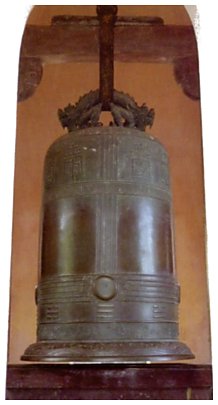
Quốc Thái Dân An, Phong Điều Vũ Thuận [國泰民安風調雨順]
[1] See: Nguyễn Anh Huy, 2016. Thưởng ngoạn mai vàng. Xưa và nay, No. 467, Spring of the Bính Thân Year.
[2] Quốc sử quán triều Nguyễn, 2004. Đại Nam Thực lục. Nxb Giáo dục, Hanoi. Vol. 2, p. 55.
[3]
See: Nguyễn Anh Huy, 2016. Sự truyền bá tư tưởng Nho giáo trên tiền tệ, một sáng tạo của vua Minh Mạng, International Workshop "Nguyễn Dynasty Royal Cultural Heritage: Research, Preservation, and Value Enhancement", organized by the People's Committee of Thừa Thiên Huế Province, September.
https://www.scribd.com/document/802206675/Di-San-Van-Hoa-Cung-Dinh-Thoi-Nguyen
[4]
A Zen monk from Guangdong, he was invited by Lord Nguyễn Phúc Chu to Đàng Trong (Vietnam) in 1695 to spread the true Buddhist teachings. During his time in Vietnam, he wrote a memoir titled Hải ngoại kỷ sự.
https://www.scribd.com/document/328787765/1695-Hải-Ngoại-Ki-Sự-Thich-Đại-San
[5] Thích Đại Sán, 2015. Hải ngoại kỷ sự. Nxb Khoa học Xã hội, p. 81.