Reward money of the Nguyễn Dynasty in the "Nguyễn Dynasty Treasures" collection of the National Museum of History
Part 1: Silver ingots of Gia Long (1802-1820)
Nguyễn Đình Chiến, Trương Văn Thắng, Vietnam Numismatics #2 (01-2018), p.38-40
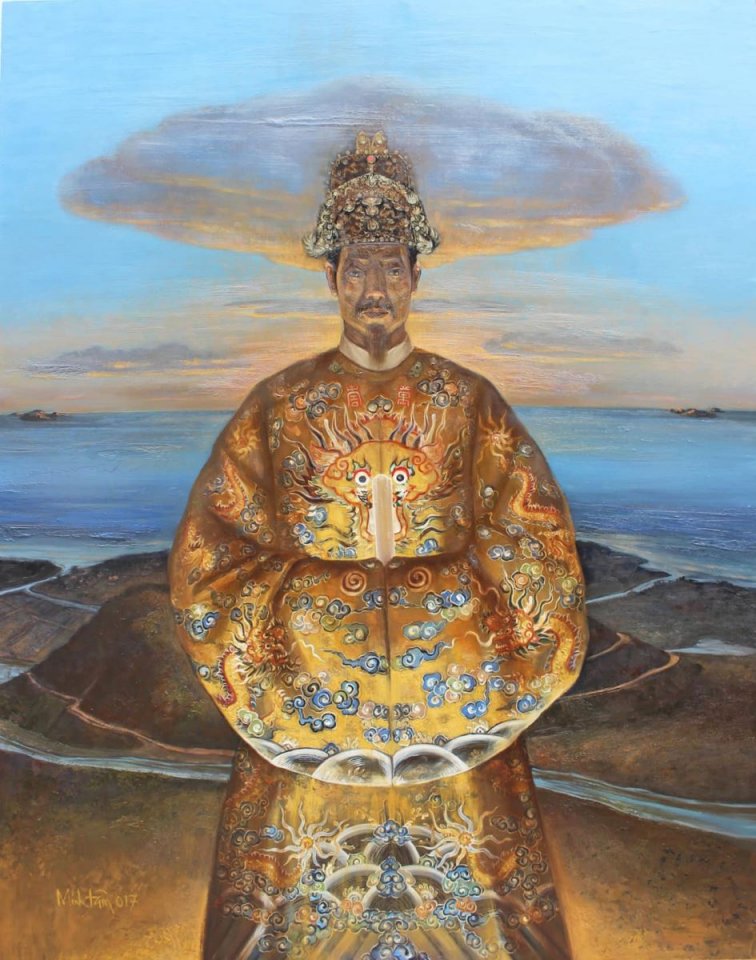
The reward money collection, part of the "Treasures of the Nguyễn Dynasty", includes inscribed pieces made from various rare and precious materials. This collection of royal treasures was transferred by the Ministry of Finance of Vietnam to the Vietnam Museum of History on December 17, 1959. After that, for security and safety reasons, the Museum packed and sealed this collection and sent it to the State Bank of Vietnam. Since receiving it back from the State Bank warehouse in 2007, the Vietnam Museum of History (now the National Museum of History) has carried out its preservation, cataloging, and initial research.
The Nguyễn Dynasty Treasures collection is an important asset with special value in the cultural heritage of the Vietnamese nation. The entire collection originated from the Huế royal treasury, which was handed over to the revolutionary government after the August Revolution in 1945.
Commemorative or reward coins are immediately distinguishable from the common currency used by the general public. Reward coins were cast in gold, silver, or gold-plated silver and copper. Depending on the economic conditions of each reigning king, the state decided the quantity and the quality of materials of the reward coins. These coins served as prestigious tokens of imperial favor, awarded to officials, royalty, nobles, and heroes on major ceremonial occasions.
In terms of types: The Nguyễn Dynasty reward coin collection includes the following categories:
- Ingots (also known as bars) cast in gold or silver.
- Round reward coins with a square central hole, made of gold, silver, or copper.
- Round reward coins without a hole, made of gold, silver, or gilt silver.
Although these types are slightly different, they all generally bear raised Chinese inscriptions recording the reign title of the king, as well as auspicious phrases signifying good fortune, purity, and blessings for the Emperor and the nation; some also include poetry or details regarding the minting location, weight, and denomination.
The main materials used to cast these reward coins were gold, silver, and copper. Among these, copper was the most common material, while gold and silver were quite rare and valuable.
Regarding artistic decoration and inscriptions: The artistic designs and decorative patterns on reward coins are very diverse and dynamic in design. Examples include motifs of floral vines, vegetation, and the sun, as well as depictions of mythical creatures like the dragon, tiger, and dragon horse. Such elaborate decorations appear almost exclusively on round coins, whereas ingots and bars typically lack them. At most, some ingots feature raised dots along the edges, but the vast majority bear only raised or incised Chinese inscriptions.
Regarding the inscriptions on reward pieces: the characters were cast or engraved in Chinese script in the regular style, making them clear and easy to read. For round coins, one side bears the the Emperor's reign title together with characters Thông Bảo [通寶]. For example: Minh Mạng Thông Bảo [明命通寶], or Tự Đức Thông Bảo [嗣德通寶]. In some cases, the characters Thông Bảo [通寶] are replaced with other characters. For example: Bảo Đại Bảo Giám [保大寶鑑]... Additionally, the character Thông [通] may be replaced by others such as Trọng [重], Nguyên [元], or Hưng [興]. However, such cases are very rare among reward coins. While the obverse is as such; the reverse may bear auspicious phrases of four or eight characters, expressing good wishes, purity, and blessings for the king, the country, and the people. For example: Liễm phúc tích dân [斂福錫民] (Gathering blessings and bringing them to the people), Kinh luân thiên hạ [經綸天下] (The talent to govern and rule the realm), Hà lưu thuận quỹ, niên cốc phong đăng [河流順軌年穀豐登] (Rivers flow in harmony, and the yearly harvests are abundant), etc. On ingots and cast bars, the inscriptions usually include the imperial reign title, as mentioned above, followed by the characters Niên Tạo [年造], such as Gia Long Niên Tạo [嘉隆年造] or Thiệu Trị Niên Tạo [紹治年造]. These are often accompanied by characters specifying the mint of origin, weight, denomination, or date. For example: Trung Bình [中平], Giáp [甲], Công [公], Trung Bình Ngân Phiến Ngũ Tiền [中平銀片五錢] (Trung Bình silver piece of five tiền), Đinh Mùi [丁未](*), Sơn Tây [山西], Bình Định [平定], etc.
Ultimately, whether the artistic style was elaborate or simple, and whether the calligraphy was beautiful and clearly raised, the content, meaning, and form remained strictly governed by imperial regulations. The collection primarily consists of issues from the reigns of Emperors Gia Long, Minh Mang, Thieu Tri, Tu Duc, Dong Khanh, Thanh Thai, Khai Dinh, and Bao Dai, while coins from the reigns of Duc Duc, Hiep Hoa, Kien Phuc, Ham Nghi, and Duy Tan are absent.
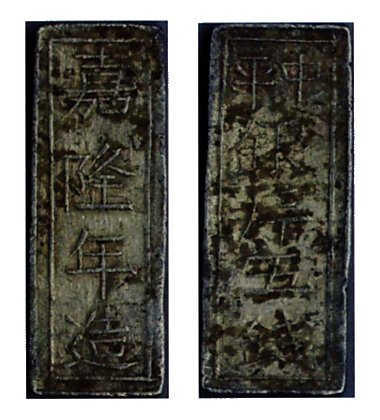
Gia Long Niên Tạo - Trung Bình Ngân Phiến Ngũ Tiền. LSb.35297
Silver Ingots of the Gia Long Era (1802-1820)
This article focuses on the silver ingots produced during the reign of Emperor Gia Long. We will introduce the other reigns one by one in the following issues.
During the reign of Emperor Gia Long, the crown authorized the issue of rectangular silver bar ingots. In the tenth month of the year Nhâm Thân [壬申] (1812), the production of 10-lạng silver ingots began. The ingots were cast as slightly curved rectangular bars measuring 12.5cm in length, 2.95cm in width, and 1.5cm in thickness, with raised seals bearing the marks Công (公) and Giáp (甲) stamped around the edges. The one lạng silver bars were likewise rectangular in form. On the obverse, four characters are cast in a vertical arrangement: Gia Long Niên Tạo [嘉隆年造] (made in the Gia Long era), on the reverse, four characters: Tỉnh Ngân Nhất Lạng [精銀一兩] (refined silver, one tael). Around the piece are additional stamped marks such as Trung Bình Hiệu [中平號], Công Giáp [公甲], Hoằng Thái [弘泰], etc. In addition, during the Gia Long reign, the minting of 5-tiền silver pieces inscribed Trung Bình Ngân Phiến Ngũ Tiền [中平銀片五錢] was also authorized. Notably, no round reward coins in gold, silver, or copper have been identified from the reign of Emperor Gia Long.
Statistical table of Gia Long silver ingots
| # | Inventory # | Dimensions (cm) | Weight (g) |
|---|---|---|---|
| 1 | LSb.39223 | 11.5x3.0 | 750 |
| 2 | LSb.39224 | D:11 | 380 |
| 3 | LSb.39225 | 11.5x3.0 | 390 |
| 4 | LSb.39226 | 11.3x3.0 | 380 |
| 5 | LSb.39229 | 11.0x2.9 | 365 |
| 6 | LSb.39230 | 11.2x2.8 | 370 |
| 7 | LSb.39231 | 11.4x2.9 | 380 |
| 8 | LSb.39232 | 11.5x2.9 | 375 |
| 9 | LSb.39233 | 11.4x3.0 | 370 |
| 10 | LSb.39234 | 11.2x3.0 | 380 |
| 11 | LSb.39237 | 11.4x3.0 | 380 |
| 12 | LSb.39238 | 11.0x3.0 | 385 |
| 13 | LSb.39239 | 11.2x2.7 | 370 |
| 14 | LSb.39240 | 14.0x3.1 | 760 |
| 15 | LSb.39241 | 14.1x3.2 | 730 |
| 16 | LSb.39242 | 14.0x3.4 | 970 |
| 17 | LSb.39245 | 14.0x3.1 | 750 |
Resources
1. Phan Thuận An, 1996. Sách kim loại triều Nguyễn. Khảo cổ học, No. 1, pp. 74-76.
2. Phan Thuận An, 2001. Các bảo vật ở Hoàng cung Huế ngày xưa qua ghi nhận của một số người Pháp. Thông báo khoa học - Bảo tàng Lịch sử Việt Nam, pp. 157-167.
3. Nguyễn Thế Anh, 2008. Kinh tế và xã hội Việt Nam dưới các Vua triều Nguyễn. NXB Văn học, Hanoi.
4. Bảo tàng TP.HCM, 2013. Sưu tập tiền Minh Mệnh trong Bảo tàng TP.HCM. NXB Hải Phòng, TP.HCM.
5. Nguyễn Tiến Cảnh và cộng sự, 1992. Mỹ thuật Huế. Huế: Viện Mỹ thuật - Trung tâm bảo tồn di tích Huế.
6. Nguyễn Đình Chiến, 2009. Kim Bảo ấn Hoàng hậu Nam Phương. Thế giới Di sản. No. 7, pp. 42-43.
7. Nguyễn Đình Chiến, 2009. Ngọc tỷ vương triều Nguyễn. Thế giới di sản. No. 8 (35), p. 32.
8. Thiều Chửu, 1993. Hán Việt từ điển. NXB TP. Hồ Chí Minh, TP.HCM.
9. Phan Thanh Hải, 2005. Đỉnh, vạc đồng thời Nguyễn. Bảo tàng Mỹ thuật Cung đình Huế. pp. 174-195. Huế: Trung tâm Bảo tồn di tích cố đô Huế.
10. Nguyễn Anh Huy, 2005. Sưu tập tiền cổ ở Bảo tàng mỹ thuật cung đình Huế. Bảo tàng Mỹ thuật Cung đình Huế. pp. 154-162. Huế: Trung tâm Bảo tồn di tích cổ đô Huế.
11. Nguyễn Anh Huy, 2007. Khảo về tiền thông dụng thời Nguyễn. Bảo tàng Mỹ thuật Cung đình Huế. pp. 167-179. Huế: Trung tâm bảo tồn di tích cổ đô Huế.
12. Nguyễn Anh Huy, 2010. Lịch sử tiền tệ Việt Nam, sơ truy và lược khảo. NXB Văn hóa Sài Gòn, TP.HCM.
13. Quốc sử quán triều Nguyễn, 1821-1945. Minh Mệnh chính yếu. Dịch từ chữ Hán - Nôm. 1974. NXB Bộ Văn hóa, Giáo dục và Thanh niên, Saigon.
14. Đỗ Văn Ninh, 1992. Tiền cổ Việt Nam. NXB Khoa học Xã hội, Hanoi.
15. Quốc sử quán triều Nguyễn, 1821-1945. Đại Nam thực lục, tiền biên. Dịch từ chữ Hán - Nôm. 1962. NXB Sử học, Hanoi.
16. Quốc sử quán triều Nguyễn, 1821-1945. Đại Nam thực lục, chính biên, tập 37. Dịch từ chữ Hán - Nôm. 1977. NXB Khoa học Xã hội, Hanoi.
17. Quốc sử quán triều Nguyễn, 1821-1945. Đại Nam thực lục, chính biên, tập 38. Dịch từ chữ Hán - Nôm. 1978. NXB Khoa học Xã hội, Hanoi.
18. Quốc sử quán triều Nguyễn, 1821-1945. Khâm định Đại Nam hội điển sự lệ. Dịch từ chữ Hán - Nôm. NXB Thuận Hóa, Huế.
19. Quốc sử quán triều Nguyễn, 1821-1945. Khâm định Đại Nam hội điển sự lệ tục biên, Vols. 1, 2. Dịch từ chữ Hán - Nôm, 2004. NXB Giáo dục, Hanoi.
20. Quốc sử quán triều Nguyễn, 1821-1945. Khâm định Đại Nam hội điển sự lệ tục biên, Vols. 3, 4. Dịch từ chữ Hán - Nôm, 2005. NXB Giáo dục, Hanoi.
21. Quốc sử quán triều Nguyễn, 1821-1945. Khâm định Đại Nam hội điển sự lệ tục biên, Vols. 5, 6. Dịch từ chữ Hán - Nôm, 2007. NXB Khoa học Xã hội, Hanoi.
22. Quốc sử quán triều Nguyễn, 1821-1945. Khâm định Đại Nam hội điển sự lệ tục biên, Vols. 7, 8. Dịch từ chữ Hán - Nôm, 2009. NXB Khoa học Xã hội, Hanoi.
23. Quốc sử quán triều Nguyễn, 1821-1945. Khâm định Đại Nam hội điển sự lệ tục biên, Vols. 9, 10. Dịch từ chữ Hán - Nôm, 2012. NXB Giáo dục, Hanoi.
24. Quốc sử quán triều Nguyễn, 1821-1945. Khâm định Việt sử thông giám cương mục. Dịch từ chữ Hán - Nôm, 1998. NXB Giáo dục, Hanoi.
25. Lục Đức Thuận và Võ Quốc Kỵ, 2009. Tiền cổ Việt Nam. NXB Giáo dục, Hanoi.
26. Bernard J. Permar, 1963. The coins collection of Annam 968-1955.
27. Phạm Quốc Quân và cộng sự, 2005. Tiền kim loại Việt Nam. Bảo tàng Lịch sử Quốc gia, Hanoi.
(*) art-hanoi.com: See https://art-hanoi.com/chronology/丁未