Monetary development policies of the Nguyễn Lords in connection with Japan
Nguyễn Anh Huy, Vietnam Numismatics #2 (01-2018), p.3-10
In the mid-16th century, due to political and historical factors, the Nguyễn clan's quest for a "refuge for ten thousand generations behind the Hoành Sơn Mountains" brought Vietnamese traditions from the North to the South. Combined with indigenous culture and the influx of Western trade, this gave rise to the Inner Realm (Đàng Trong), with an emerging market economy. And due to the unique factors of the natural geography of the Inner Realm, together with the influences of geopolitics, geoculture, and geoeconomics, this region developed into a novel free-trade zone. As Li Tana noted in her doctoral dissertation: "Currency and commerce were indeed vital to the survival and development of this land... making Đàng Trong different from any other Vietnamese society in history."[1]
In this context, and because the regions of Quảng Nam and Thuận Hóa had no copper mines,[2] the Nguyễn lords were in great need of imported copper. From studies on foreign trade, we know that from the 15th to the mid-16th century, the Japanese imported Vĩnh Lạc Thông Bảo [永樂通寶] coins from China for circulation. By 1608, however, the Japanese authorities prohibited these coins in order to gradually standardize their own currency. This created an opportunity for Japanese merchants to sell the old coins to Đàng Trong, which the Dutch referred to as "the most profitable commodity".[3]
- "These copper coins were the most in-demand imported goods in Đàng Trong… The Japanese merchants were indeed formidable competitors. The coins they brought from Japan were always sold to the Japanese residents in Faifoo (Hội An)…"[4]
- "Japanese ships... traded goods in China... primarily copper... the ships purchased (to bring to Đàng Trong) from Guangdong: the minted coins yielded substantial profits…"[5]
- In January 1637, Dutch merchants delivered 13.5 million zeni (Japanese copper coins) to the mouth of the Hàn River (Tourane - Đà Nẵng).[6]
- In addition to the Dutch, the Chinese also brought large quantities of Japanese metal coins to Đàng Trong. For example, in September 1637, four Chinese ships brought from Japan to Đàng Trong... 2 million zeni.[7]
Initially, the lords of Đàng Trong mainly purchased these old copper coins to cast cannons against the Outer Realm (Đàng Ngoài). However, in a commercial economy, these coins met the growing demand for currency in circulation. And this coin trade was very active...
One contemporary witness, Cristophoro Borri, a European who came to Đàng Trong in 1621, noted: "The Chinese and the Japanese were the principal merchants in Đàng Trong".[8] According to statistics on Japanese red-seal ships trading to Southeast Asia, 356 vessels sailed between 1604 and 1635; of these, 87 went to Đàng Trong, the largest share.[9] Conversely, Chinese merchant ships from Southeast Asia sailing to Japan between 1647 and 1720, according to statistics by Iwao Seiichi, totaled 663 vessels; of these, 203 departed from Đàng Trong, also representing the largest share.[10] We cannot know the total number of coins transported to Đàng Trong, but the VOC (Dutch East India Company) alone brought over 100 million coins to Đàng Trong in five years (1633-1638),[11] an enormous quantity.
In 1651, the Portuguese earned a 150% profit on the copper coins they brought to Đàng Trong, realizing a net gain of 180,000 taels of silver from imports valued at 120,000 taels.[12]
However, Đàng Trong still suffered from a shortage of circulating coins. So when Lord Nguyễn Phúc Thái ascended the throne in 1687, one of his concerns, as with his predecessors, was to secure coins for circulation. In 1688, on the occasion of a Chinese merchant, Hoàng Khoan Quan, traveling to Japan for trade, the lord sent a royal letter to the Japanese government requesting assistance in this matter:
1. The First Letter[13]:
The King of Annam respectfully sends a letter to His Majesty, the Great King of Japan.
The Book of Documents states: "Relations between kingdoms must value the principles of trust and righteousness." Your country and mine are far apart; we are not neighboring states that harm one another. It is said that in the past, although our countries were far apart, there were still national relations, maintained through friendship and close brotherhood ties. But recently, it has been learned that your country has cut off relations with other nations. Now I wish to restore our old ties, hoping for commerce and friendly relations. Last year, I gathered a few gifts for you and respectfully presented them to the Shogunate. Through this, I wish to establish trust between our countries; yet, since your land is so distant, once a letter has been sent one can only await a reply, and not a day passes without my thoughts turning to your country. On this occasion, I send a few humble gifts to you, in order to establish new bonds of friendship and goodwill. Though initially we were distant, I believe that in the end a close and cordial relationship will surely arise. I privately think that my country now requires substantial funds for currency circulation, but lacking the techniques to cast coins, I have no choice but to put financial matters aside.
I have heard that in your country, copper is of good quality, and coins are produced according to need. If this is true, why not cast more copper coins to aid countries that are short of currency? I hope that your country enacts regulations for the circulation of copper coins abroad, and conducts trade with my country so that both nations may benefit. If this can be accomplished, both nations will benefit through friendship, strengthen mutual trust, and be united as one family. This is truly wonderful.
2. The Second Letter[14]:
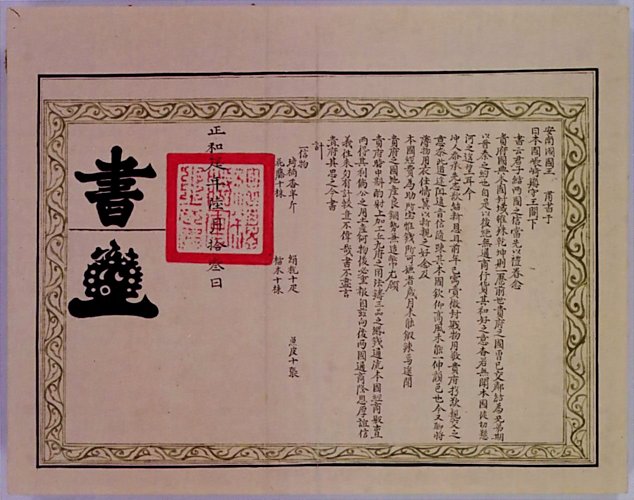
The King of Annam respectfully sends this letter to His Excellency, the Governor of Nagasaki, Japan.
It is written: A virtuous man, in forming relations between two nations, must first observe proper rites. I think: The lands of your honorable domain and my country differ in size, yet both exist under Heaven. In former times, your honorable domain and my country were neighbors and formed a brotherhood, making a covenant like that of Jin and Qin. Since that time, there has been no trade or exchange of goods, so that the former spirit of friendship and harmony has become rarely seen and seldom heard.
My nation looks toward your distant shores with great expectation. Now I, the humble one, following the wishes of my ancestors, desire to establish new bonds of friendship. Therefore, last year I sent a letter together with a few humble gifts, respectfully presented to your honorable domain, in the hope of establishing closer relations. However, because the distance is great and the route obstructed, communication has been sparse. The respect my country bears for you is not merely an outward formality. Now I again send a few humble gifts, to express sincere feelings, and to demonstrate fresh and cordial goodwill.
I consider that money is essential for the needs of my country. It is regrettable that, despite the passing of years, we have still been unable to cast and refine it. From afar I hear that your land produces fine copper and that you have mastered the art of casting coins.
I especially hope that your honorable domain will carefully consider applying effort and resources to establish the method for use in the nine prefectures, casting strings of cash of three types, so that they may circulate to my country for merchants and traders, to the profit of both sides. Thus both countries will benefit and it will serve for public use. If this is done, the native products of my country will later be sent as a generous return to your honorable domain. From this time forward, if the two countries trade with one another, with abundant favor and deep friendship, and with trust and good faith exchanged between them, would this not be a great thing? This letter cannot express everything; I hope your honorable domain will kindly take it into consideration. Thus written.
Enclosed gifts: Half a catty of agarwood; Ten vines of flowering rattan; Ten bolts of soft silk; Ten trunks of premium hardwood; Ten sheets of fish skin.
Dated the 13th day of the 6th month, 9th year of Chính Hòa (1688)
(Red seal of the Governor General)
3. The Third Letter:
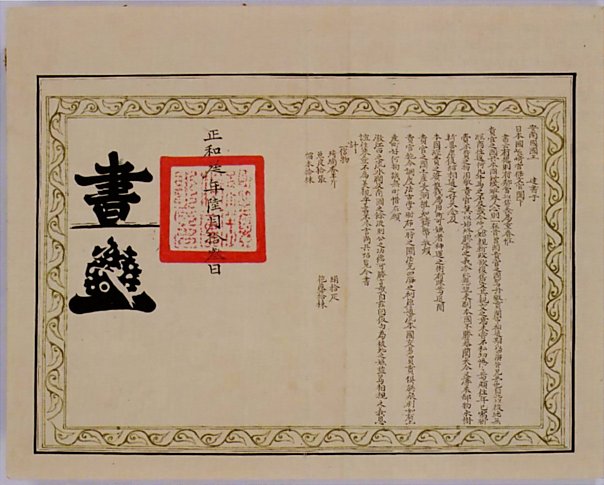
The King of Annam respectfully sends this letter to His Excellency, the Head of the Bureau of Foreign Affairs at Nagasaki, Japan.
The Book of Documents says: "Where there is virtue, there will be friends; all should value trust and righteousness above all."
I think: the lands of Your Excellency and my country differ in territory, yet the hearts of the people are alike. From former times I have heard that your country once sent large ships to my land for trade, opening markets so that we could understand one another - this was the spirit of brotherhood throughout the four seas.
Since that time, there has been no trade between us; perhaps the reason is that high waves and strong winds made it impossible to reach one another. Having recently assumed the responsibilities of state,[15] I now wish to restore the good relations of former times. The wish for close friendship has always been most sincere. Moreover, last year I sent a few humble gifts to Your Excellency, as a token of close friendship between us. But because the distance between our two countries is great, I cannot personally come to your country. My country does not cease to hold admiration for your honorable nation. Now I again send a few humble gifts, hoping to foster new goodwill and secure the benefits of mutual exchange.
I think that the expenses of my country are all met through the use of money. It is regrettable that our methods of production remain quite primitive.
From afar I have heard that the lands of Your Excellency's country produce fine copper, and that you have mastered the art of making coins.
I respectfully ask Your Excellency to carry out the regulation of coin casting, using resources to organize a comprehensive method for producing currency, so that it may serve the profits of all under the four seas and circulate to my country for trade, to the benefit of both nations. Should this be accomplished, I shall sincerely send our finest native products and specialties in return, without reserve. I hope that, with a proper system in place, the coins will flow swiftly like water to reach my southern country. Surely your honorable merits cannot be fully expressed in words. From now on, let our mutual affection and friendly relations grow ever stronger. Would this not be a most excellent thing? This letter cannot express everything. I respectfully hope that Your Excellency will kindly consider it. Thus written.
Enclosed gifts: Half a catty of agarwood; Ten sheets of fish skin; Ten trunks of premium hardwood; Ten bolts of soft silk; Ten vines of flowering rattan.
Dated the 13th day of the 6th month, 9th year of Chính Hòa (1688)
(Red seal of the Governor General)
4. The Fourth Letter:
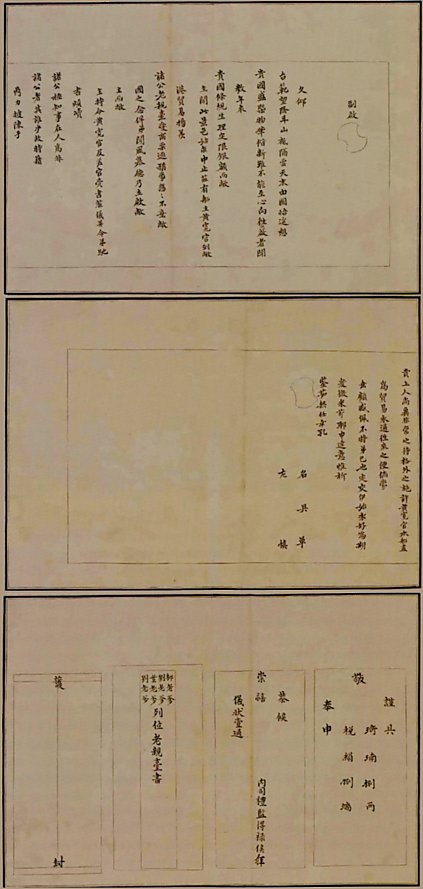
A communication from Lord Đắc Lộc of An Nam to the officials at Nagasaki.
Respectfully submitted (sealed with a black seal).
With the deepest respect, you are as great as he Northern Dipper and Mount Tai, like the high sky and vast clouds, although we have not yet met.
From afar I think: your honorable country prospers, and all things flourish in brightness. Though I cannot yet come there, my heart is ever turned toward your country.
I report that, for several years now, I have heard that your country has established regulations limiting the amount of silver. My sovereign has been informed of this matter and understands it well. Now the shipmaster Hoàng Khoan Quan has arrived at our port for trade, clearly showing that you, venerable sirs, highly value gentle and harmonious commerce with distant lands.
Hoping that your favor will not be withdrawn, my country believes in the close bonds of friendship. Upon hearing of your esteemed virtue, we have respectfully reported this to my sovereign. Then my sovereign specially commissioned Hoàng Khoan Quan, together with the appointed officials, to deliver a courteous letter to you. You may be assured that these representations are sincere and have not been falsely constructed. We are uncertain of your intentions. This letter has been written with all effort to present matters clearly to Your Excellencies. We respectfully request that you continue to hold our matter in consideration, allow this exception, and permit the ship of Hoàng Khoan Quan to trade, so that commerce may proceed smoothly and continuously. We humbly hope that you will let go of lingering attachments; if so, we shall be most grateful, as this demonstrates the special bonds of friendship already between us. May our relations continue as before, enduring in goodwill for ten thousand generations. Thus, we offer humble gifts of herbs to express our long-term intentions. We humbly hope that you will consider this further, with clarity and benevolence in the manner of Confucian tradition.
The names have been recorded in the petition clearly and carefully.
Respectfully, the following are provided in full: 8 taels of agarwood and 8 bolts of fine silk.
Obeying orders, I respectfully await the favorable outcome.
Respectfully recorded by Lord Đắc Lộc of the Department of Ceremonies.
Respectfully addressed to: Master Lang, Master Lưu, Master Diệp, Master Thừa Lưu...
5. The Fifth Letter:
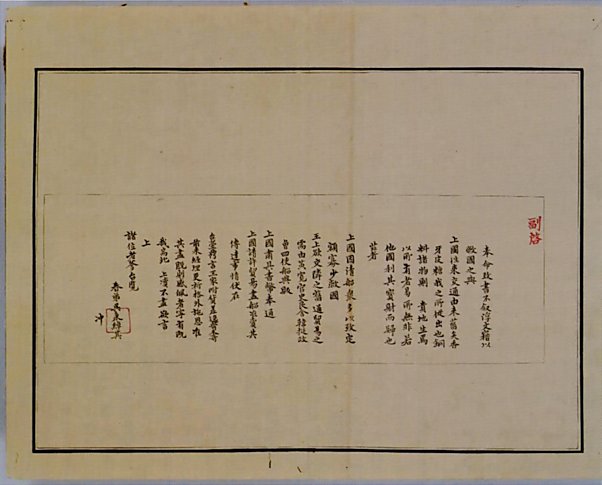
A communication from Ngô Bình Xước of An Nam to the port officials of Nagasaki.
Obeying orders to send this letter, I do not presume to comment on my crude writing. I humbly think that trade and relations between our country and your superior country have continued for a long time. Agarwood, ivory, fish skin, and sugar are all goods that our country exports. Copper and various goods are produced in your country; is it not reasonable to exchange what each of us possesses? If other countries have valuable goods, they should naturally be brought together.
Now your superior country, because of the large number of ships, has set quotas to limit them. The king of our country wishes to maintain relations as before and to allow trade according to the needs of commerce. Therefore, four ships of Hoàng Khoan Quan, Sử Lương Xả, Hàn Đĩnh, and Chính Tằng have sailed to your superior country for trade. They respectfully bring letters and funds to present to your country and request permission for commerce, so that the ships may be allowed to trade. They convey the matter and humbly rely on your esteemed approval. Our Sovereign has also sent additional local goods as gifts with those who have previously come here to trade. We humbly hope for special favor to be granted, and if allowed, we shall be deeply grateful for the kindness already shown. I respectfully submit these requests, though words cannot fully express my intent. I hope that you, esteemed masters, will consider them.
Respectfully submitted by Ngô Bình Xước.
🙠🙡🙢🙣
Looking over the contents of the five letters, we can clearly see several points:
- Lord Nguyễn Phúc Thái personally wrote three letters on the same day, including one addressed to the Emperor of Japan and two to the officials in charge of the Nagasaki port. The content of all three letters written by Lord Nguyễn was to request Japan's assistance in minting coins.
In addition, Lord Đắc Lộc of the Department of Ceremonies also wrote a letter of introduction, and the secretary[16] Ngô Bình Xước likewise wrote a letter presenting the matter.
In total, there are five letters, from which we can see that minting coins for the country's use was very important and that nearly the entire Nguyễn court took was concerned about it.
[1]
Li Tana, 1999. Xứ Đàng Trong: Lịch sử Kinh tế - Xã hội Việt Nam thế kỷ XVII và XVIII. NXB Trẻ, TP.HCM, p. 117.
https://books.google.com/books?id=wOfWjZ3LvnsC
[2]
Lê Quý Đôn. Phủ biên tạp lục. Translated from Hán - Nôm, 1977. NXB Khoa học Xã hội, Hà Nội, p. 221.
https://archive.org/details/phubientapluc_vsh_2007
[3] Dagh-Register gehouden int Casteel Batavia vant. Cited in Li Tana, p. 138.
[4]
W.J.M. Buch, 1936-1937. "La Compagnie Des Indes Néerlandaises Et l'Indochine," B.E.F.E.O. Cited in Thành Thế Vỹ, 1961. Ngoại thương Việt Nam hồi thế kỷ XVII, XVIII và đầu XIX. NXB Sử học, Hà Nội, p. 104.
https://books.google.com/books?id=hX8utwAACAAJ
[5] Bowyear, 1695. Nhật ký về Đàng Trong. Cited in Thành Thế Vỹ, pp. 226-227.
[6] Thành Thế Vỹ, p. 148.
[7] W.J.M. Buch, 1929. De Oost Indische Compangie En Quinam. Amsterdam, H.J. Paris. Cited in Li Tana, p. 138.
[8]
Cristophoro Borri, 1621. Xứ Đàng Trong. 1998 Translation. NXB TP.HCM, TP.HCM, p. 89.
https://books.google.com/books?id=6YDs0AEACAAJ
[9] Nguyễn Văn Kim, 2003. Quan hệ của Nhật Bản với Đông Nam Á thế kỷ XV-XVII. NXB Đại học Quốc gia Hà Nội, pp. 125-126, Table 3.1.
[10] Li Tana, p. 101.
[11]
A. Van Aelst, Neil Gordon Munro, 1904. Coins of Japan. Yokohama, pp. 111-112.
https://archive.org/details/coinsofjapan00munr
[12] General Missiven van Gouverneurs-Generaal en Raden aan Heren XVII der Verenigde Oostindische Compagnie, (The Hague: Martinus Nijhoff, 1960-1976) II, 651-652; cited in Hoàng Anh Tuấn, "Hoạt động nhập khẩu kim loại tiền của Công ty Đông Ấn Hà Lan và tác động của nó đến kinh tế Đàng Ngoài thế kỷ XVII," Việt Nam trong hệ thống thương mại Châu Á thế kỷ XVI-XVII, p. 508.
[13] This translation of the first letter is taken from the translation by Prof. Kawamoto Kuniye, "Nhận thức quốc tế của chúa Nguyễn ở Quảng Nam căn cứ theo Ngoại phiên thông thư," Đô thị cổ Hội An. NXB Khoa học Xã hội, Hà Nội, 1991, pp. 176-177.
[14] The translations of the remaining four letters, and the images of the five letters, are taken from: Võ Vinh Quang, 2014. "Giới thiệu và bước đầu tìm hiểu về năm bức quốc thư liên quan đến tiền tệ của chúa Nguyễn gửi Nhật Bản năm 1688," Huế xưa và nay, No. 124, July-August.
[15] Lord Nguyễn Phúc Thái had just come to power in 1687, and wrote the letter in 1688.
[16] Official interpreter.